Boeing Embeds Executive Inside Rolls-Royce Factory to Fix 787 Engine Issues
Boeing's decision to place a senior executive inside Rolls-Royce's factory to oversee the repair of the Trent 1000 engine has been met with controversy. The move was made in response to a series of inflight turbine damage events that exposed critical durability flaws deep within the engine core.
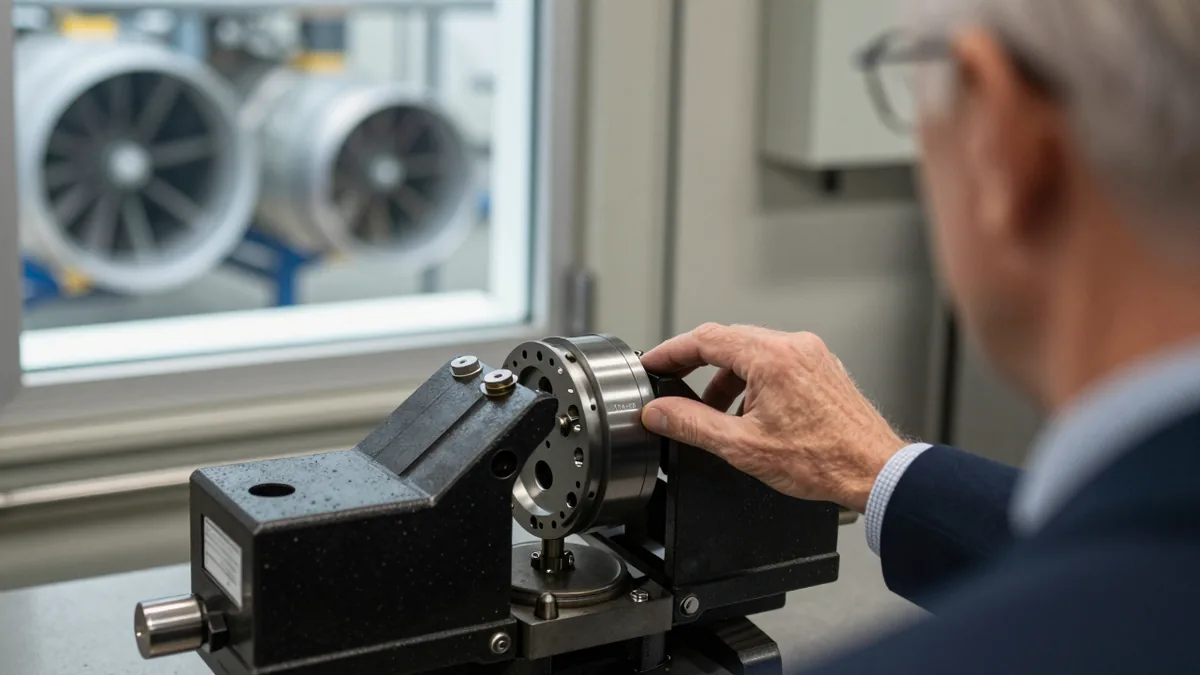
The relationship between Boeing and Rolls-Royce has been strained due to Boeing's decision to embed a senior executive inside Rolls-Royce's factory to oversee the repair of the Trent 1000 engine.
## Inflight Failures Ground the Dreamliner
A series of alarming inflight turbine damage events exposed critical durability flaws deep within the Trent 1000 engine core. According to The Seattle Times, back-to-back engine failures on consecutive days amid Air New Zealand flights led operators and safety regulators to confront severe structural cracking on intermediate pressure compressor blades. This technical breakdown quickly spiralled into a global operational crisis, directly affecting nearly a quarter of all active Dreamliners.
| Engine Model | Cracking Rate | | --- | --- | | Trent 1000 | 30% | | Total Engines Affected | 383 | | Projected Retrofit Duration | Up to 4 years |
The technical breakdown led to a massive retrofit program, with engineers facing a massive overhaul of the engine's internal components. The crisis also led to a breakdown in trust between Boeing and Rolls-Royce, with regulators imposing stringent operational restrictions on the 787 fleet.
## Removing the Appeal of the 787
The restrictions imposed on the 787 fleet, including drastically reducing ETOPS ratings, destroyed the core commercial justification for flying twin-engine widebodies across oceans. When airworthiness authorities downgraded affected 787s from 330-minute to 140-minute ETOPS, long-haul flight paths had to be completely rerouted to stay within range of emergency diversion airports. This led to longer, fuel-heavy detours, instantly turning profitable flights into financial liabilities for international carriers.
| ETOPS Rating | Original | Restricted | | --- | --- | --- | | 787 | 330 minutes | 140 minutes | | Inspection Interval | Every 200 flights | Every 80 flights |
The operational chaos pushed Boeing leadership to abandon traditional customer-supplier boundaries and make a move virtually unprecedented among top-tier aerospace partners.
## In Comes the Oversight
Keith Leverkuhn, Boeing's Vice President at the time, was sent to oversee the repair of the Trent 1000 engine. His role became vital to the manufacturer's future because Boeing needed a heavyweight program director who could restructure supply-chain problems and gain authority immediately. Leverkuhn's team scrutinized every aspect of the repair workflow, tracking each of the 383 affected engines needing retrofits and ensuring that replacement parts were routed directly to 43 grounded Dreamliners awaiting powerplants.
| Engine Model | Number of Engines Affected | | --- | --- | | Trent 1000 | 383 | | Grounded Dreamliners | 43 |
The embedding of a senior executive helped streamline communication and accelerate shop-floor logistics, but it could not instantly fix the underlying physics destroying the turbofans.
## Customers Turning to Rivals
Rolls-Royce's financial reckoning was swift and staggering. Cash provisions, operational penalties, and direct compensation to airlines quickly pushed the cost of the Trent 1000 crisis beyond £1.38 billion ($1.8 billion). Under long-term TotalCare service contracts, Rolls-Royce was still responsible for maintaining engine availability. When engines were pulled for unexpected teardowns, the manufacturer was forced to pay millions in downtime penalties, source temporary lease engines at high rates, and reimburse airlines for disrupted long-haul schedules.
| Financial Impact | Amount | | --- | --- | | Total Cost | £1.38 billion ($1.8 billion) |
High-profile launch customers experienced severe operational problems. Air New Zealand, a flagship operator of the Trent 1000, saw up to five of its 14 787-9 examples grounded at the height of the shortages. According to Airline Ratings, the operational disruption prompted Air New Zealand to turn to rival General Electric for subsequent widebody powerplants, selecting the GEnx-1B for its replacement fleet.
## The Eventual Fix
The permanent resolution came from moving beyond temporary inspections and launching a radical overhaul of the turbofan's internal thermal dynamics. To stop the destructive heat that cracked internal components, engineers developed a comprehensive redesign of the high-pressure turbine blade and its cooling aperture network. As detailed by official Rolls-Royce engineering releases, the re-engineered high-pressure turbine blade increased cooling airflow by 40%, dropping core blade metal temperatures by 81°F (45°C).
| Thermal Dynamics | Original | Redesigned | | --- | --- | --- | | Cooling Airflow | - | 40% increase | | Core Blade Metal Temperature | - | 81°F (45°C) drop |