Vietnam Airlines 787-9 runway overrun Munich August 2026
A Vietnam Airlines Boeing 787-9 overran the runway at Munich Airport during takeoff on August 15, 2026, after repeated brake inputs from the captain's
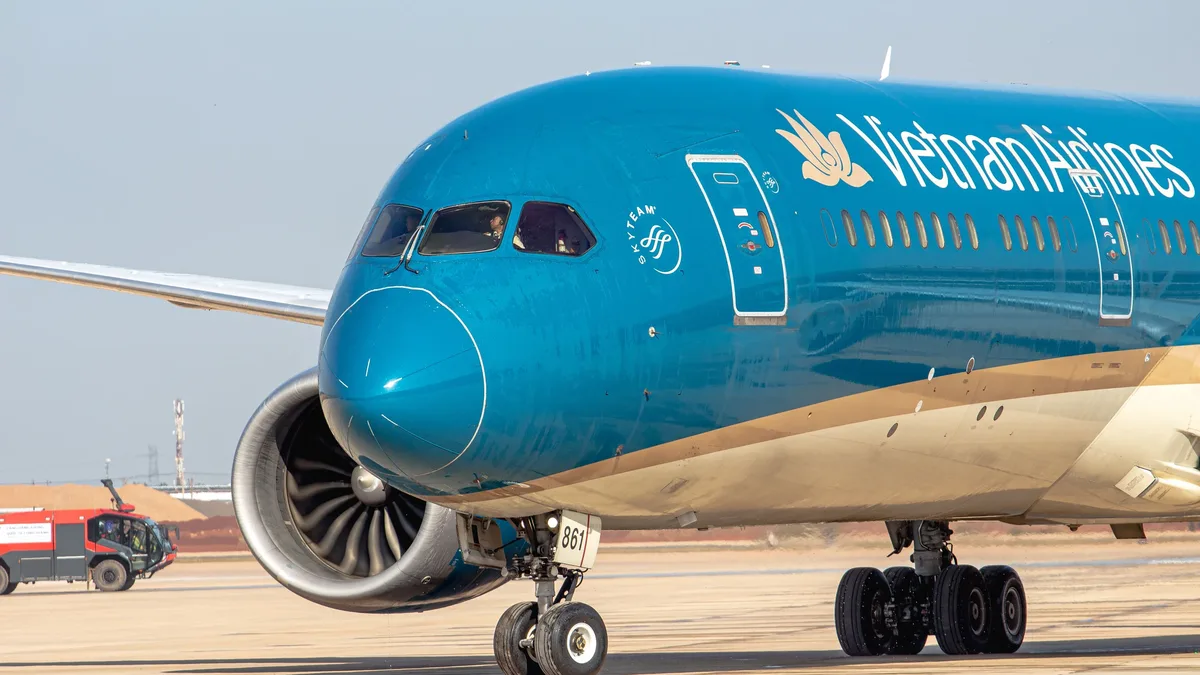
A Vietnam Airlines Boeing 787-9 overran the runway at Munich Airport during takeoff, failing to achieve sufficient speed before returning for an emergency landing. The German Federal Bureau of Aircraft Accident Investigation found repeated brake pedal inputs at the captain’s seat during the takeoff roll of Vietnam Airlines flight VN34 on August 15, 2026.
The incident occurred during a takeoff roll on a 13,000-foot runway with full thrust. The aircraft rotated below its calculated VR speed of 175 knots, triggering stall protection before liftoff. It eventually became airborne from grass beyond the opposite runway threshold, struck an approach light, and returned to Munich. No injuries were reported among the 287 people on board. The aircraft has remained grounded in Munich since the incident.
Technical details of the incident
The aircraft rotated below the required speed, experienced multiple brake inputs from the captain's side, and suffered damage to landing gear and runway infrastructure. The flight recorder showed rudder pedal inputs and movements on both sides of the left seat brake pedals shortly after takeoff roll began.
Just under a minute later, the Brake System Control Unit recorded a maximum brake command of around 27% on the left and 17% on the right. The pilots attempted to rotate the aircraft at 163 knots. The aircraft struggled to gain speed despite adequate thrust. The rudder pedals and brakes are part of the same system but are not intended to be used simultaneously during takeoff.
Leading edge slats automatically extended as the stall protection system activated. The aircraft was not overweight. Four tires were damaged on the left main landing gear. Damage also occurred to the runway lights.
| Aircraft Detail | Specification |
|---|---|
| Registration | VN-A867 |
| MSN | 39287 |
| Build Year | 2016 |
| Engines | GE GEnx-1B |
| Flight Hours | 41,421 |
| Flight Cycles | 8,189 |
| Route | Munich-Hanoi |
| Route Launched | October 2024 |
| Configuration | Three classes |
| Passengers | 271 |
| Crew | 16 |
| Speed Parameter | Knots |
|---|---|
| Calculated V1 | 169 |
| Rotation Attempt | 163 |
| Calculated VR | 175 |
| V2 | 180 |
The German Federal Bureau of Aircraft Accident Investigation said: "Just seconds after the takeoff roll started, the flight recorder showed rudder pedal inputs and movements on both sides of the left seat brake pedals." The BFU classified the event as an accident due to structural damage.
Investigation and implications
The German Federal Bureau of Aircraft Accident Investigation has not determined the cause of the repeated brake inputs, leaving open questions about pilot actions, system failure, or intentional behavior. The preliminary report raises more questions than answers about pilot actions or system failure.
The BFU confirmed repeated brake inputs from the captain's side but has not determined the cause, citing possibilities including mechanical failure, pilot error, or intentional action. The captain's role is considered especially puzzling due to expectations of strict procedural discipline. The preliminary report does not confirm whether the brake inputs were due to pilot error, system malfunction, or intentional action.
The incident drew comparison to Air India Flight AI171, a deadly Boeing 787 takeoff accident involving power reduction after takeoff. Pilots and airlines must reevaluate cockpit procedures and brake system safeguards to prevent similar near-misses on long-haul routes.
Further analysis by the BFU is pending with no timeline for final conclusions or operational changes affecting the airline's fleet.