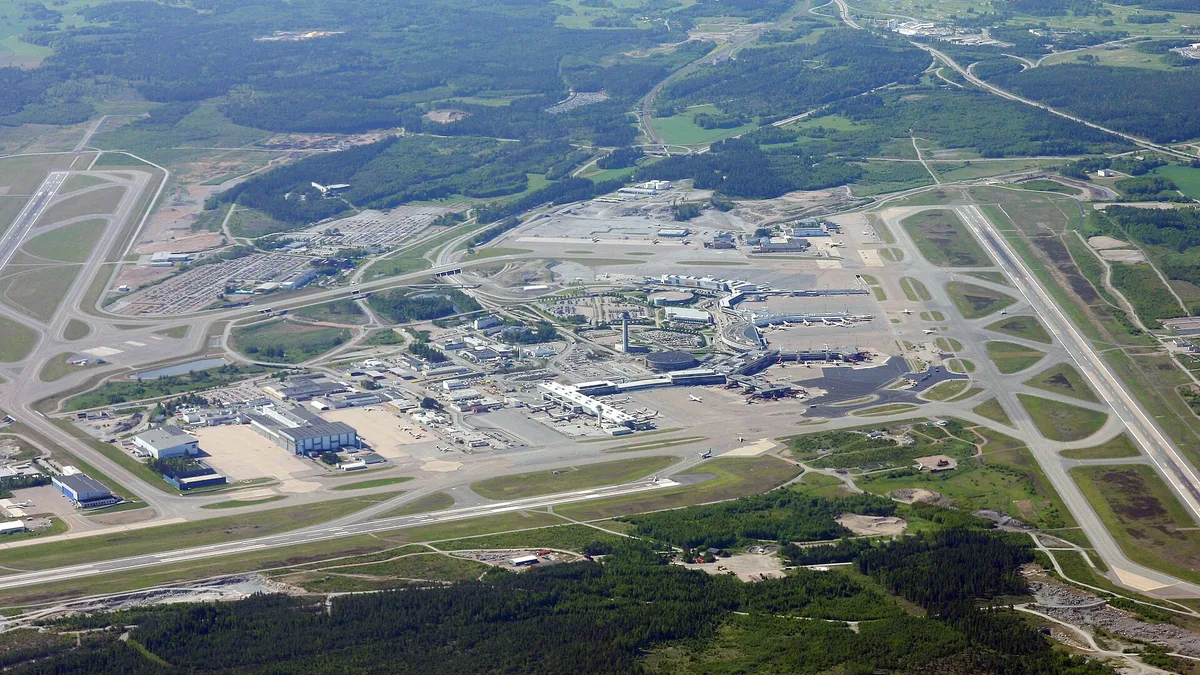
Arlanda
| Airline type | Scheduled passenger carrier |
|---|---|
| Headquarters location | Stockholm, Sweden |
| Primary hub | Stockholm Arlanda Airport (ARN) |
| IATA airline designator | TF |
| Service focus | Regional and international routes |
| Fleet composition | Regional jet aircraft |
| Typical cabin service | Complimentary refreshments |
Origin and history
Arlanda originates from Sweden and was established in the middle of the 20th century. The airport was developed to serve as a major international gateway for the Stockholm region and the wider Nordic countries. Its creation was a strategic infrastructure project to replace the older Bromma Airport, which had become insufficient for growing post-war air traffic. The airport's name is derived from the nearby parish of Ärlinghundra, linking it to its local geographical context. Initial operations were modest, but expansion occurred rapidly throughout the 1960s and 1970s to accommodate jet aircraft. Today, it stands as the largest airport in Sweden and a primary hub for Scandinavian air travel.
What it is for
Arlanda serves as Sweden's primary international airport, facilitating both passenger travel and air cargo operations. Its core function is to connect Stockholm and Sweden with destinations across Europe and the wider world. The airport infrastructure is designed to handle the full spectrum of aviation activities, from short-haul regional flights to long-distance intercontinental journeys. It functions as a major hub for airlines, enabling efficient passenger transfers between different flights. Furthermore, it supports critical economic and logistical functions through its extensive cargo handling facilities. The airport also incorporates extensive commercial and retail spaces, operating as a significant commercial center in its own right.
Arlanda legroom
Legroom on flights departing from Arlanda is not determined by the airport itself but by the individual airline operating the flight. The specific seat pitch, which is the standard measurement for legroom, varies significantly between carriers and fare classes. Passengers must investigate the seating policies of the airline they are flying with to understand the space they can expect. Some airlines offer extra legroom seats for an additional fee, which can be purchased during booking or at check-in. It is a common mistake for travelers to assume all airlines provide similar legroom, leading to discomfort on longer flights. Researching airline seat reviews and specifications before booking is the only reliable method to gauge legroom from Arlanda.
Overview
Arlanda Airport is a large, modern aviation complex located approximately 40 kilometers north of Stockholm city center. It operates four passenger terminals, with Terminals 2 and 5 being the main facilities for international and Schengen flights. The airport is a central component of Sweden's transportation network, with high-speed rail and bus links providing efficient connections to the capital and other regions. As a major hub, it offers a wide range of amenities including numerous shops, restaurants, lounges, and business services. Its runways and air traffic control systems are equipped to manage a high volume of flights in various weather conditions, which is essential for Nordic operations. The overall passenger experience is shaped by its scale, efficiency, and the policies of the airlines using it.
What to know
When flying from Arlanda, passengers must know that airline fares and inclusions are set by the carriers, not the airport. The process for finding a fare involves searching airline websites, online travel agencies, or metasearch engines, comparing options across different airlines that serve your route. A basic economy fare typically includes only a seat and a small personal item, while standard fares may add a carry-on bag and seat selection. When a flight is canceled or significantly delayed, your rights are governed by EU Regulation 261/2004, as Sweden is an EU member state. This regulation entitles you to assistance (meals, communication, accommodation) and, in many cases, financial compensation, depending on the cause of the disruption. Always address claims for compensation or refunds directly to the operating airline, not the airport authority.
Common questions
A common question is whether Arlanda and Stockholm Airport are the same entity, and they are, as Arlanda is Stockholm's main international airport. Travelers frequently ask about the best way to travel between the airport and the city, with the Arlanda Express train being the fastest option, though airport coaches and taxis are also available. Many passengers inquire about luggage storage facilities, which are available in Terminals 2 and 5 for a fee. Questions regarding lounge access are also prevalent, with access typically granted through business class tickets, premium airline status, or independent lounge membership programs. People often ask what to do during a long layover, and options include visiting the nearby Sky City complex or taking a short train trip into Stockholm. Another frequent query concerns the handling of flight disruptions, and passengers are directed to contact their airline's service desk within the terminal for immediate rebooking and assistance.
Pros and cons
A significant pro of using Arlanda is its extensive network of direct flights to global destinations, making it a highly convenient international gateway. The airport's facilities are generally modern, clean, and well-signposted in English, reducing travel stress. However, a notable con is its high cost environment, where everything from food and drink to parking is priced substantially higher than in Stockholm city center, straining travel budgets. The common mistake is underestimating transfer times between terminals, particularly when moving from non-Schengen to Schengen flights, which can involve a lengthy bus transfer and security re-screening. Travelers who regret choosing Arlanda are often those on tight budgets or those with short domestic connections who find the airport's scale and costs burdensome. Furthermore, its susceptibility to winter weather delays, while managed competently, can still lead to disruptions during the Nordic winter months.
Who it suits
Arlanda best suits international travelers, particularly those flying long-haul or to numerous European destinations, due to its comprehensive flight network. It is ideal for business travelers who value frequent flight schedules, premium lounge access, and efficient rail links to central Stockholm. The airport also suits transit passengers connecting through Scandinavia, as airlines like SAS and others have designed schedules to facilitate hub transfers. It is less suited to ultra-low-cost travelers seeking the absolute cheapest fares, as many budget airlines operate from smaller, alternative airports like Stockholm Skavsta or Västerås. Leisure travelers with ample time before their flight may appreciate the shopping and dining options, while those in a rush or with mobility issues might find the large terminal layouts challenging. Ultimately, it is the default and most logical choice for most people traveling to or from the Stockholm region who prioritize direct flight availability and full service.