KLM cuts 5,000 positions in major restructuring to secure future
KLM is cutting nearly 15% of its workforce, outsourcing ground handling, and simplifying its fleet to achieve €1 billion in annual savings by 2028.
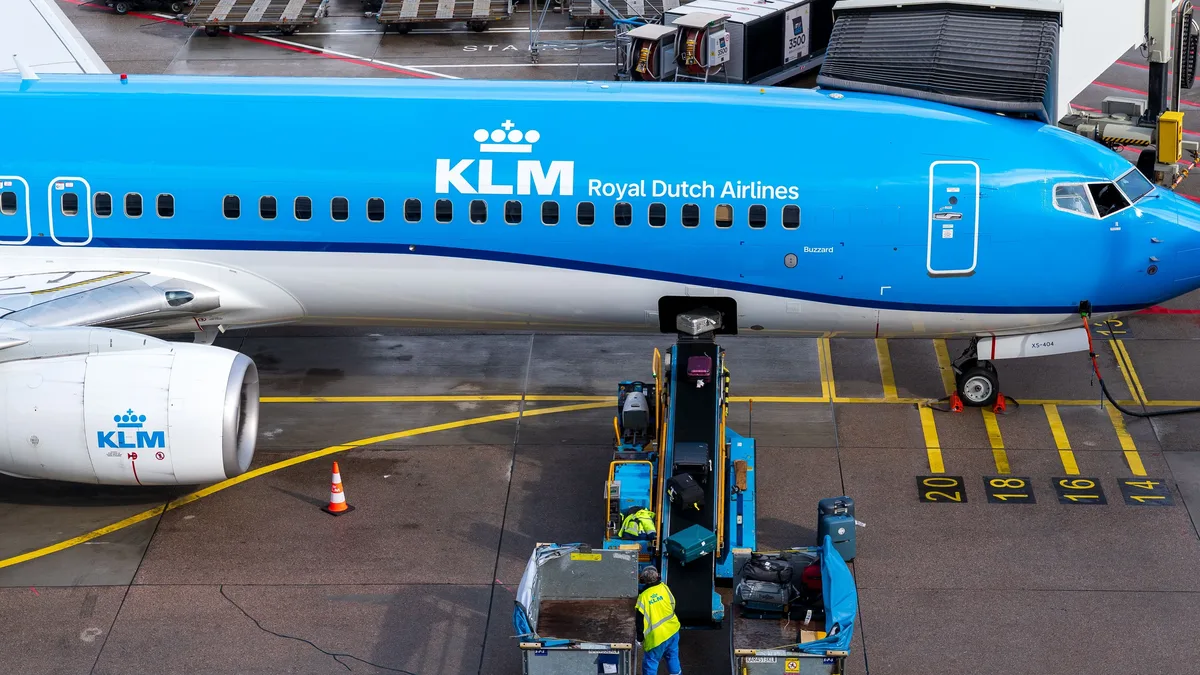
KLM announced a sweeping restructuring on November 5, cutting approximately 5,000 positions. The airline's headcount will fall from around 36,000 to 31,000 full-time equivalents. The plan targets €1 billion in annual financial improvements by 2028 to secure the carrier's long-term viability. Chief Executive Marjan Rintel stated that global instability and high fuel costs required these changes.
KLM expects to avoid compulsory redundancies. The company will rely on natural attrition, voluntary departure schemes, and internal redeployment. The workforce reduction is part of a broader effort to permanently increase productivity by at least 8% by 2028. This push for higher efficiency is expected to reduce staffing needs by a further 1,000 positions.
Productivity and cost-saving measures
The restructuring aims to deliver an annual financial improvement of €1 billion by 2028. This builds on €750 million in structural savings already secured through measures like reducing office positions and consolidating office space. Combined, the total targeted improvement is €1.4 billion per year.
The company is demanding a minimum 8% structural productivity boost from remaining employees by 2028. This will come alongside what the airline describes as 'very moderate' pay increases. These demands set up difficult negotiations with Dutch aviation trade unions over new collective labour agreements.
Workforce transfers and outsourcing
Not all 5,000 positions represent direct job losses. Approximately 2,000 roles will be transferred into the broader Air France-KLM group structure. This includes 1,500 staff at customer contact subsidiary Cygnific.
Work associated with 800 positions in Ground Services will be outsourced to third-party contractors. Also, activities involving 1,250 positions at KLM Catering Services were shifted into a partnership with Switzerland-based gategroup earlier in the spring. KLM CityHopper, a wholly owned subsidiary, will handle outsourced ground services for European flights at the Amsterdam Schiphol hub.
Fleet simplification and operational changes
KLM will simplify its fleet to 185 aircraft as part of the cost-cutting drive. The airline is phasing out its Boeing 737 and Embraer E190 aircraft over the coming years. It will retain its newly delivered Airbus A321neo aircraft.
The carrier is also shifting its fleet strategy for regional operations. It will abandon an order for new Airbus A320neo planes. Instead, it will favour smaller Embraer E195-E2 aircraft, expanding the footprint of its regional subsidiary KLM Cityhopper.
Chief Financial Officer Bas Brouns defended the package as necessary to preserve KLM's core international hub operations. The airline plans to maintain its network of 160 destinations served nonstop from Amsterdam's Schiphol Airport.
The announcement came despite an improvement in KLM’s recent quarterly figures. The KLM Group’s operating result rose to €458 million in the third quarter, up from €352 million a year earlier. However, Air France-KLM chief executive Ben Smith noted KLM's profit margin remained below 5%. He cited high Dutch air passenger tax and Schiphol's airport charges as pressures.
Trade unions reacted with concern to the scale of the overhaul. CNV negotiator Souleiman Amallah said the plan has sparked deep uncertainty, stating that 'the employees pay the price'. FNV representative Egon Groen warned that outsourcing ground handling risks 'unhealthy competition' at Schiphol. Marjan Rintel said, "That’s why, at this pivotal moment for KLM, we’re taking far-reaching, sometimes painful measures."
Management warned that further adjustments to staffing and employment conditions could be necessary depending on progress. The implementation of these measures and the achievement of the 8% productivity target are set for completion by 2028.