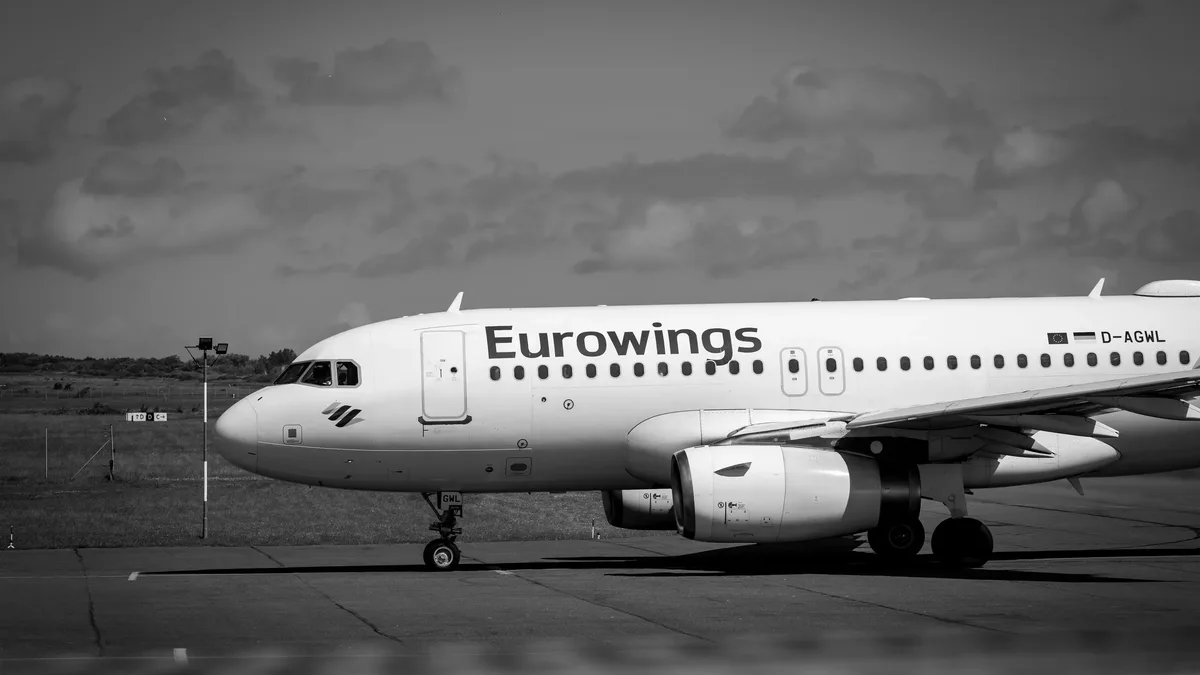
Eurowings
| Airline type | Low-cost carrier |
|---|---|
| Country of origin | Germany |
| First created | 1993 |
| Original use | Regional and leisure travel |
| Headquarters city | Cologne |
| Parent company | Lufthansa Group |
| Fare inclusions | Seat, small cabin bag; checked baggage, seat selection, refreshments cost extra |
| Passenger rights regulation | EU Regulation 261/2004 applies for flights within, to, or from the EU/EEA |
Origin and history
Eurowings is a German low-cost airline headquartered in Düsseldorf. Its origins trace back to the early 1990s when it was established as a regional carrier. The airline was initially founded to operate feeder flights for the German flag carrier Lufthansa. In the late 1990s, Eurowings began to expand its route network independently across Europe. A significant transformation occurred in the 2010s when Lufthansa integrated its Germanwings operations and later its own European short-haul flights into the Eurowings brand. This restructuring positioned Eurowings as the Lufthansa Group's primary low-cost carrier for point-to-point travel within Europe and to some leisure destinations.
What it is for
Eurowings operates scheduled passenger flights, primarily on short-haul and medium-haul routes across Europe. The airline's core purpose is to provide low-fare air travel to a broad market of leisure and price-sensitive business travelers. It serves a network of destinations that includes major European cities, popular holiday regions, and some metropolitan areas outside Europe. Eurowings functions as the main low-cost arm of the Lufthansa Group, allowing the parent company to compete in the budget travel segment. The airline utilizes a hub-and-spoke system with bases at several German airports, including Düsseldorf, Hamburg, and Cologne/Bonn, alongside point-to-point connections. Its service model is designed to offer basic transportation with various paid extras for ancillary services.
Pros and cons
A primary advantage of Eurowings is its integration into the Lufthansa Group network, which can offer connections and a degree of corporate stability not always present with independent low-cost carriers. The airline's route network from Germany is extensive, providing access to many secondary and leisure destinations. A significant drawback is its complex fare structure and aggressive unbundling of services, where even standard amenities like checked luggage or seat selection incur substantial extra fees. Operational reliability has been a recurring criticism, with passengers frequently reporting delays and cancellations that can be difficult to resolve due to perceived customer service shortcomings. The common mistake is booking the basic "Saver" fare without carefully adding necessary extras, leading to a final price at check-in that often rivals traditional airlines. Travelers who regret choosing Eurowings are typically those who experience disruptions and find the rebooking process cumbersome and who discover that the promised low base fare does not align with their actual travel needs.
Who it suits
Eurowings suits budget-conscious leisure travelers based in Germany or neighboring countries who are traveling with minimal luggage and have flexible schedules. It is a practical choice for passengers whose primary goal is low-cost point-to-point transportation to the airline's specific destinations and who are willing to forgo included amenities. The airline can be suitable for travelers familiar with the low-cost model who meticulously compare total costs, including all necessary add-ons, before booking. It is less suited for business travelers requiring high reliability, guaranteed flexibility, or seamless connections, unless booked on a higher, more inclusive fare bracket. Passengers who prioritize predictable customer service and straightforward compensation procedures during disruptions may find better alternatives elsewhere. Ultimately, Eurowings serves as a specific tool within the Lufthansa ecosystem for cost-sensitive travel when the route and total price are favorable.