American Airlines' Chicago O'Hare Hub Faces
Analysis suggests American Airlines may lose hundreds of millions annually at Chicago O'Hare, where United holds a revenue and cost advantage.
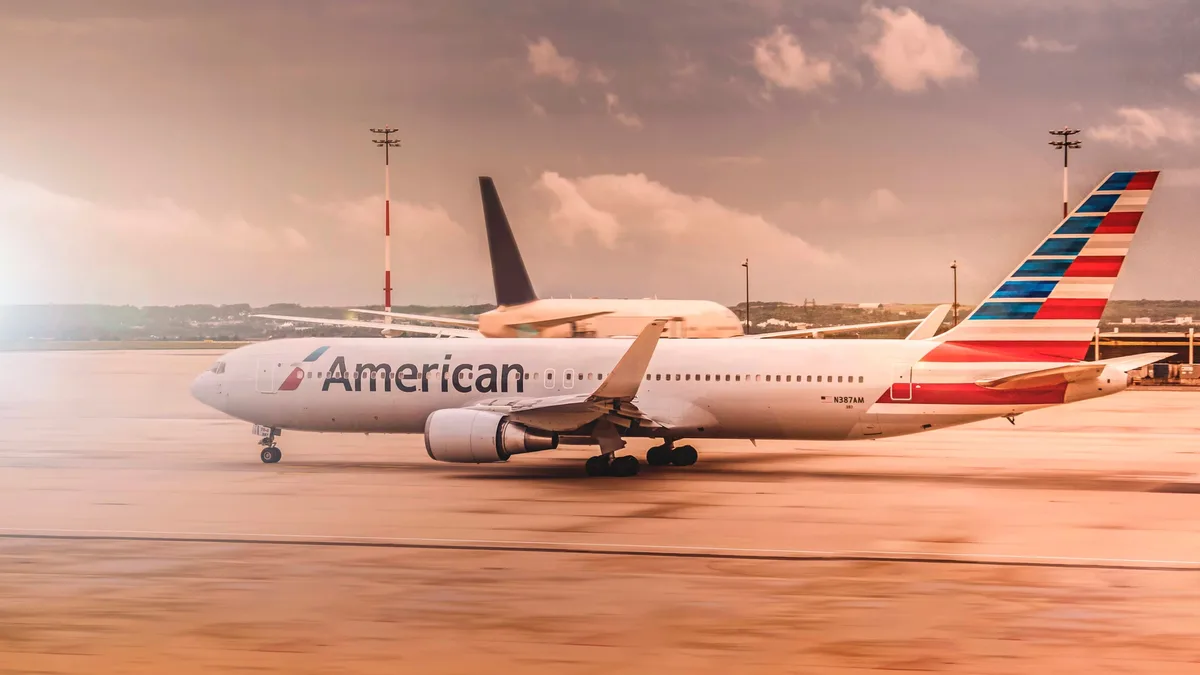
United Airlines CEO Scott Kirby claims American Airlines is losing around $1 billion per year at Chicago O'Hare Airport. An independent analysis, highlighted by the source One Mile at a Time, suggests American's financial performance there is significantly weaker than United's, though the full picture includes complex revenue streams like loyalty programs.
According to an analysis posted by X user bentboolean, United holds a substantial lead over American in key financial metrics at the Chicago hub. The analysis used artificial intelligence and focused on domestic operations. It found United generates more revenue and operates at a lower cost per seat on flights from Chicago.
| Metric | United Airlines | American Airlines |
|---|---|---|
| Domestic revenue per air seat mile | 26.6 cents | 24.0 cents |
| Domestic cost per air seat mile (direct aircraft operating costs) | 11.19 cents | 11.73 cents |
| Annualized aircraft operating margin (Chicago) | $2.82 billion | $1.84 billion |
The analysis indicates United's domestic revenue per air seat mile is 10.5% better than American's. Its domestic cost per air seat mile is also 4.6% better, which the source attributes largely to United operating a higher percentage of mainline aircraft from Chicago. These figures only account for direct aircraft operating costs, excluding gate rents, ground handling, and corporate overhead.
Scott Kirby has repeatedly suggested American is losing massive sums in Chicago and may eventually have to exit the airport. The source notes that if United is roughly breaking even in Chicago, then the analysis implies American could indeed be losing close to $1 billion annually on a direct operating basis. However, the source strongly cautions that this view is incomplete.
The analysis does not factor in ancillary fees, cargo revenue, or loyalty and co-brand credit card revenue. The source points out that these are now major profit drivers for airlines, with some carriers operating passenger flights at a narrow margin or loss to feed their lucrative loyalty programs. Therefore, the source suspects American's actual net loss in Chicago, after accounting for all revenue streams, is likely in the hundreds of millions of dollars annually, not the ten-figure sum Kirby cites.
American faces a difficult competitive environment at O'Hare. The source states American has lower revenue and higher costs than United there, which is a problematic combination. Attempting to improve margins by using larger aircraft with lower per-seat costs could, according to the source's analysis, potentially worsen financial performance.
Furthermore, the source notes American currently has an inferior onboard product compared to United. While American has announced positive changes, they will not be fully implemented until well into the 2030s. In contrast, United plans to have new narrow-body interiors and Starlink Wi-Fi on virtually all its planes by the end of 2027.
The source concludes that while Kirby's $1 billion loss figure might have a basis in direct operating results, it does not represent the full financial impact of maintaining a hub in Chicago, which includes significant loyalty program benefits. The battle for dominance at O'Hare continues, with United showing no willingness to cede ground.
Source: One Mile at a Time