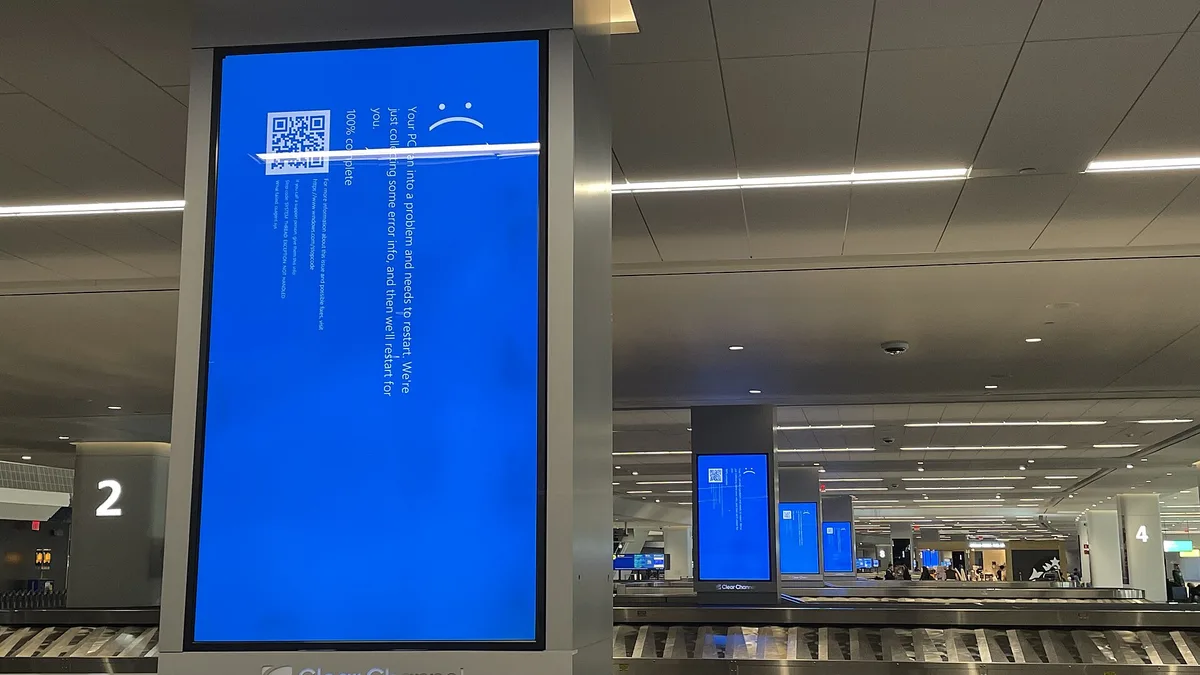
It Outages And System Failures
| Site context | The disruption, "IT Outages And System Failures" |
|---|---|
| Original use | To describe a service interruption in a technological system |
| Typical cause | Software bugs, hardware failures, network issues, or cyber attacks |
| Common impact | Loss of service access, data processing delays, or transaction failures |
| Typical duration | Minutes to days, depending on severity and cause |
| Common compensation | Service credits, refunds, or goodwill gestures as per terms of service |
| Standard recourse | Contact provider support, check system status pages, or file a formal complaint |
Origin and history
The systematic study of IT outages and system failures as a distinct discipline emerged in the late 20th century, primarily in the United States and other technologically advanced economies. Its formalization was driven by the increasing dependence of critical infrastructure, commerce, and daily life on complex digital systems. High-profile failures, such as the ARPANET collapse in 1980 and major telecommunications outages in the 1990s, provided early case studies. The development of root cause analysis methodologies, like the Swiss Cheese Model adapted from risk management, provided a framework for understanding these events. Academic and industry research into software reliability and high-availability architectures further solidified the field. The proliferation of internet-based services in the 2000s made the topic a central concern for business continuity planning and operational risk management globally.
What it is for
This discipline provides a structured approach to understanding, managing, and mitigating the complete or partial loss of information technology services. Its primary purpose is to ensure business continuity by identifying single points of failure and designing resilient systems. It establishes formal protocols for incident response, including communication chains, escalation procedures, and roles during a crisis. The field defines service level agreements (SLAs) and service level objectives (SLOs) that set measurable expectations for system availability and performance. It also creates the frameworks for post-incident reviews, focusing on root cause analysis rather than individual blame. Furthermore, it informs investment decisions in redundancy, backup systems, and disaster recovery infrastructure based on calculated risk and potential impact.
Pros and cons
A major advantage of a robust IT outage management framework is the significant reduction in both the frequency and duration of service disruptions, protecting revenue and reputation. It provides clear accountability and standardized procedures during high-stress events, preventing chaotic and ad-hoc responses. The structured post-mortem process turns failures into organizational learning, preventing repeat incidents. A significant drawback is the substantial and ongoing cost required for comprehensive redundancy, such as maintaining geographically separate data centers, which can be prohibitive for smaller organizations. A common mistake is over-engineering for availability without a commensurate analysis of actual business risk, leading to wasted resources. Organizations often regret a purely technical focus that neglects to train human operators and update response playbooks, leaving them vulnerable when a novel failure occurs. Another frequent error is failing to adequately test failover and recovery procedures, resulting in unexpected complications during a real outage.
Who it suits
This discipline is essential for any organization whose core operations depend on digital services, including financial institutions, healthcare providers, and e-commerce platforms. It is particularly suited to large enterprises and public sector bodies where system failures can have widespread societal or economic consequences. Companies operating in highly regulated industries, such as utilities or telecommunications, require its frameworks to meet strict compliance and reporting obligations. Technology firms and cloud service providers adopt its most advanced principles to achieve the "five nines" (99.999%) of availability demanded by their clients. It also suits IT governance and risk management professionals who are responsible for auditing system resilience and business continuity plans. Conversely, very small organizations or those with minimal digital dependency may find a full formal framework disproportionate, though basic principles of backups and incident response still apply.
Latest It Outages And System Failures news
Latest reporting

UK ATC Failure Grounds Hundreds of Flights
A four-hour technical failure in the UK's air traffic control system on September 8, 2026, caused massive disruption, leading to hundreds of...

NATS System Failure Grounds UK Flights, Causes Major Delays
A technical failure in the UK's air traffic control flight processing system has caused widespread flight delays and cancellations, particularly at...

OMAAT Launches Paid Points, Community Tools
OMAAT has introduced a paid membership points system and new community features, including updated profiles and improved search.

US Air Force Awards Contract for Second Engine Source for JASSM
The US Air Force has awarded a contract to GE Aerospace and Kratos Defense & Security Solutions for the development of the F143 engine as a...

Concorde's Droop Nose: A Necessary Compromise for Supersonic Flight
Concorde's iconic droop nose was more than just a visibility aid-it was a critical engineering solution to the challenges posed by its delta wing...