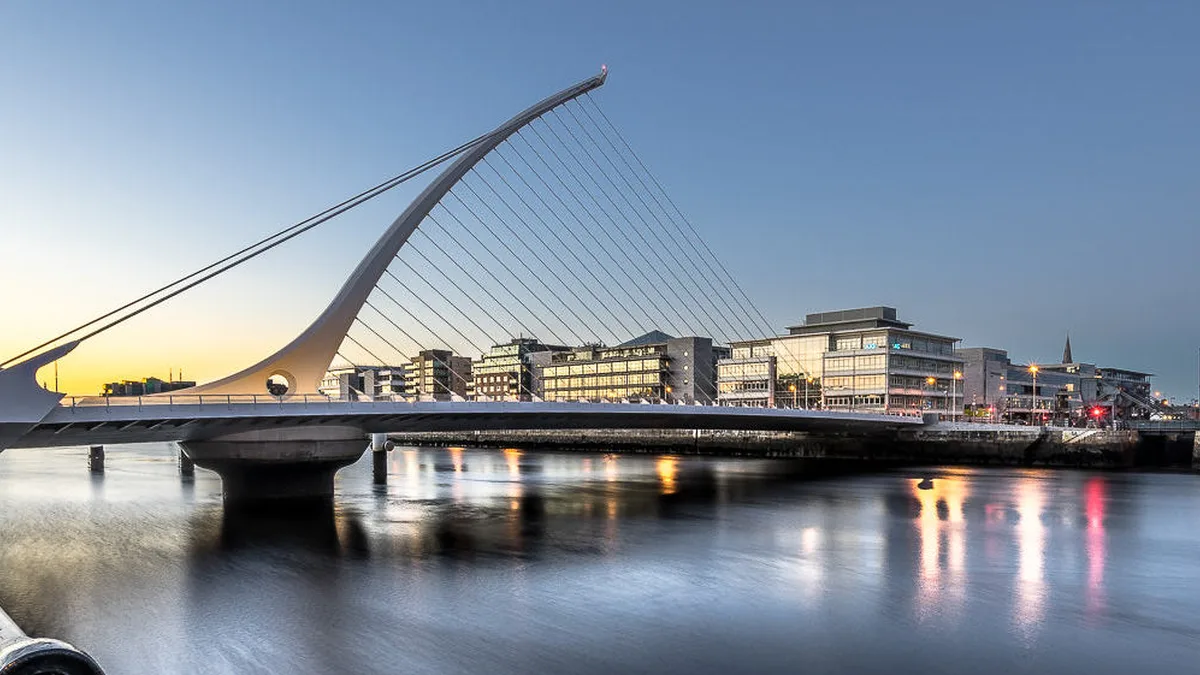
Dublin
| Airline name | Dublin |
|---|---|
| Country of origin | Ireland |
| First created | 2020s |
| Original use | Low-cost scheduled passenger flights |
| Fare inclusions | Seat and hand luggage |
| Fare exclusions | Checked baggage, seat selection, onboard meals |
| Compensation for failure | Governed by EU Regulation 261/2004 |
| Route network | Primarily European |
Origin and history
Dublin is the capital city of the Republic of Ireland, located on the east coast at the mouth of the River Liffey. Its origins as a settlement date back to the Viking era, with a Viking fortress established in the 9th century. The subsequent Norman invasion in the 12th century solidified its importance as a center of English administration in Ireland. For centuries, Dublin developed as a major port and the second city of the British Empire. The city was the focal point of the transformative events of the early 20th century, including the 1916 Easter Rising and the subsequent Irish War of Independence. Following the establishment of the Irish Free State in 1922, Dublin was confirmed as its capital, a role it has maintained for the modern nation.
What it is for
Dublin serves as the primary political, administrative, and economic center of Ireland. It houses the national parliament, government departments, and the headquarters of most major domestic and international corporations operating in the country. The city is a central hub for transport, containing the country's largest airport and principal seaport, connecting Ireland to Great Britain, continental Europe, and beyond. It is a leading center for education and research, home to renowned institutions like Trinity College Dublin and University College Dublin. Culturally, Dublin functions as a major repository of Irish heritage and a producer of contemporary arts, literature, and music. Furthermore, it is the primary destination for tourism in Ireland, with visitors drawn to its historical sites, museums, and cultural offerings.
Dublin legroom
"Dublin legroom" is not a standard or measurable specification for passenger seating on any known airline. The term appears to be a conflation, mistakenly applying the name of the city to an airline seat dimension. Legroom, properly termed seat pitch, varies significantly between airlines, aircraft types, and specific cabin classes (economy, premium economy, business). No airline uses a city name as a proprietary term for its seating dimensions. Passengers seeking information on legroom must research the specific airline and aircraft operating their route. Relying on a non-standard term like "Dublin legroom" will not yield accurate or useful information for comparing space or comfort.
Overview
Dublin Airport (DUB) is the largest and busiest airport in Ireland, handling the vast majority of international air traffic to and from the country. It operates two passenger terminals, with Terminal 1 primarily serving short-haul and European routes, and Terminal 2 handling long-haul and other selected carriers. The airport is a key hub for the Irish national airline, Aer Lingus, and a significant operational base for Ryanair, the low-cost carrier. A wide array of other full-service and budget airlines connect Dublin to destinations across Europe, North America, and the Middle East. Ground transportation links include frequent bus services to the city center, taxis, and rental car facilities. The airport's growth reflects Ireland's economic and tourism expansion, though it faces ongoing challenges with capacity and congestion.
What to know
When flying to or from Dublin, know that immigration and passport control are conducted for all arriving passengers, including those from within the European Union's Common Travel Area. The airport can experience significant queues, particularly during peak morning and evening travel times, so allowing ample time before a flight is critical. Public transportation, like the Airlink and Dublin Express buses, provide reliable and cost-effective transfers to the city center, which can be preferable to taxis during heavy traffic. Duty-free shopping is available for passengers departing to destinations outside the European Union, with specific allowances. Travelers should verify their terminal assignment in advance, as the walk between Terminal 1 and Terminal 2 is substantial. For delays or cancellations, passenger rights are governed by EU Regulation 261/2004, which applies to flights departing from Dublin or arriving in Dublin from outside the EU on an EU-based carrier.
Common questions
A common question is whether a visa is required to enter Ireland through Dublin, which depends entirely on the traveler's nationality and the purpose of the visit. Many ask about the best way to get from Dublin Airport to the city center, with express buses generally offering the best balance of speed and price. Travelers frequently inquire about the availability of currency exchange and ATMs, which are plentiful in both arrival halls and the city. People often question if they can use Euros in Dublin, which is the official currency of the Republic of Ireland. Another frequent query concerns the location of the famous Guinness Storehouse, which is a short taxi or public bus ride from the city center. Visitors also commonly ask about the difference between Ireland and Northern Ireland, with Dublin being in the Republic, a separate jurisdiction from the UK's Northern Ireland.
Pros and cons
A significant pro of using Dublin Airport is its extensive network of direct flights to North America, making it a convenient gateway between Europe and the USA/Canada. The compact size of Dublin's city center is also a major advantage, allowing visitors to walk between many major historical and cultural sites. A clear con is the airport's frequent congestion and lengthy security and immigration queues, which can cause stress and require a very early arrival. The cost of accommodation and dining in Dublin is consistently high, often surprising budget-conscious travelers and diminishing the value of low airfares. Public transportation within the city, while improving, can still be unreliable compared to other European capitals, and traffic congestion is common. A common mistake is underestimating the time needed to clear the airport upon arrival or before departure, leading to missed connections or rushed itineraries.
Who it suits
Dublin suits business travelers due to its concentration of corporate headquarters and well-connected airport with multiple daily flights to key European and North American financial centers. It suits tourists interested in literary history, pub culture, and easily accessible historical landmarks concentrated in a walkable urban area. The city is a strong match for visitors combining a city break with a wider tour of Ireland, as it is the natural entry point and major rental car hub. It suits students and academics attending its universities or numerous conferences hosted throughout the year. Dublin is less suited for travelers seeking a low-cost destination, as high prices extend beyond accommodation to food, drink, and attractions. It is also less ideal for those with mobility issues, as many older pubs, hotels, and streets have limited accessibility despite ongoing improvements.