Gatwick
| Airline name | Gatwick Airways |
|---|---|
| Country of origin | United Kingdom |
| First created | 1980s |
| Original use | Leisure and charter flights |
| Fleet size | Small fleet |
| Primary hub | London Gatwick Airport (LGW) |
| Common destinations | Mediterranean holiday resorts, Canary Islands |
| Fare inclusions | Seat, checked baggage (varies by fare), onboard refreshments (varies) |
| Compensation for failure | EU/UK passenger rights for delays and cancellations apply |
Origin and history
Gatwick is a major international airport located in West Sussex, England. Its origins as an aviation site date back to the late 1920s when it was first used as a private aerodrome. The site was developed into a commercial airport during the 1950s, with its official opening as a modern airport occurring in 1958. This development was driven by the post-war expansion of civil aviation and the need for a second airport to serve London. The airport's name is derived from the nearby village of Gatwick, whose name has Old English origins. The airport has undergone significant expansions, most notably with the opening of a second terminal in 1988 and subsequent ongoing upgrades to its infrastructure and capacity.
What it is for
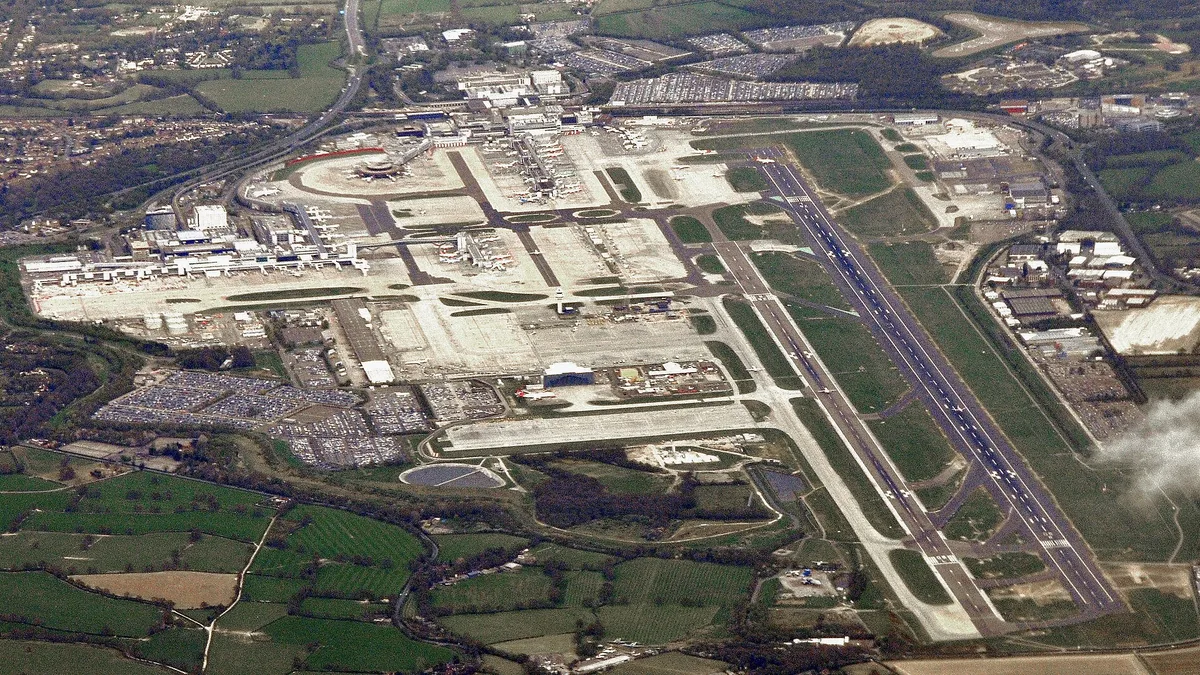
Gatwick Airport functions as a primary hub for passenger travel, serving as a key point of departure and arrival for numerous airlines. It is designed to facilitate commercial air travel, handling scheduled flights, charter services, and cargo operations. The airport's primary purpose is to connect London and the South East of England to destinations across Europe and the wider world. It serves as a major base for low-cost carriers and also operates as a focus city for several full-service airlines. Its infrastructure, including two passenger terminals and a single runway, is dedicated to processing travelers, baggage, and aircraft efficiently. The airport also supports ancillary services such as retail, dining, and ground transportation links.
Gatwick legroom
Legroom, or seat pitch, at Gatwick is not determined by the airport itself but by the individual airlines operating from it. Passengers flying from Gatwick will experience a wide range of legroom standards depending on their chosen carrier and fare class. Low-cost airlines typically configure their cabins with minimal seat pitch to maximize passenger capacity, often resulting in tight legroom in standard economy seats. Full-service airlines may offer more generous legroom in their economy cabins, and significantly more in premium economy or business class. It is essential for passengers to research the specific seat dimensions for their booked airline and aircraft type, as these can vary even within the same carrier's fleet. There is no standard "Gatwick legroom" measurement applicable to all flights departing from the airport.
Overview
Gatwick Airport is the second-busiest airport in the United Kingdom by passenger traffic and operates as a single-runway airport. It consists of two main passenger terminals, the North Terminal and the South Terminal, which are connected by a shuttle train. The airport offers a wide range of destinations, with a particularly strong network of European short-haul routes alongside long-haul services to North America, Africa, and Asia. Its operational model is characterized by a mix of airline business models, serving as a key base for point-to-point travel. The passenger experience includes standard airport facilities such as check-in desks, security screening, baggage reclaim, and a variety of commercial offerings. Ground transportation links include a dedicated railway station with direct services to London, as well as bus, coach, and road connections.
What to know
When traveling from Gatwick, passengers should know that check-in and security processes are terminal-specific, so confirming your terminal in advance is crucial. The airport experiences peak congestion during early morning and evening hours, which can significantly increase security queue times. Gatwick's flight schedule is heavily weighted towards leisure travel, meaning it can see extreme passenger volumes during school holidays and summer weekends. Many airlines operating from Gatwick, especially low-cost carriers, have strict policies on baggage allowances and check-in deadlines, with high fees for non-compliance. Passengers should also be aware that the airport's single runway means operations are highly susceptible to disruption from adverse weather or technical incidents.
Common questions
A common question is which terminal a specific flight departs from, as this information is vital and can change, so passengers must verify with their airline. Many travelers ask about the fastest or cheapest method of transport to Central London, with the Gatwick Express train being the dedicated premium service and other rail options offering slower but less expensive journeys. Passengers frequently inquire about the availability and cost of airport lounges, which are airline-operated or accessible through independent lounge programs for a fee. Questions regarding long-stay parking options, their locations relative to the terminals, and shuttle bus frequencies are also very common. Travelers often seek clarification on the rules for liquids in hand luggage and the specifics of the security screening process at Gatwick. Another frequent question involves procedures for flight delays or cancellations, particularly regarding compensation rights and airline obligations for refreshments and accommodation.
Pros and cons
A significant pro of using Gatwick is its extensive network of European destinations, often with competitive fares from low-cost carriers. The airport's dedicated rail link provides a direct connection to London Victoria station, offering a reliable transit option for many travelers. However, a major con is the airport's susceptibility to severe disruption due to its reliance on a single runway; any incident can cause widespread delays and cancellations across the entire operation. The high volume of leisure travelers can lead to overcrowded terminals, long queues, and a generally stressful environment during peak periods. Passengers who regret choosing Gatwick often do so when faced with last-minute flight cancellations by budget airlines and find the rebooking and compensation processes challenging. A common mistake is underestimating travel time to the airport or terminal transfer time, leading to missed flights, as the scale of the airport and road congestion are frequently miscalculated.
Who it suits
Gatwick Airport best suits leisure travelers seeking cost-effective flights to European holiday destinations, particularly those using budget airlines. It is convenient for passengers residing in or traveling from South London, Surrey, Sussex, and Kent, for whom the journey is more direct than to other London airports. The airport suits point-to-point travelers who do not require complex connecting flights, as its layout is designed for origin and destination traffic rather than as a major transfer hub. It can also suit business travelers on specific routes where flight times align, though the leisure-focused atmosphere and potential for disruption may be less ideal. Passengers with flexible schedules who can avoid peak travel times will experience a smoother process. It is less suited for travelers requiring extensive global connections or those who prioritize the operational resilience of a multiple-runway airport.