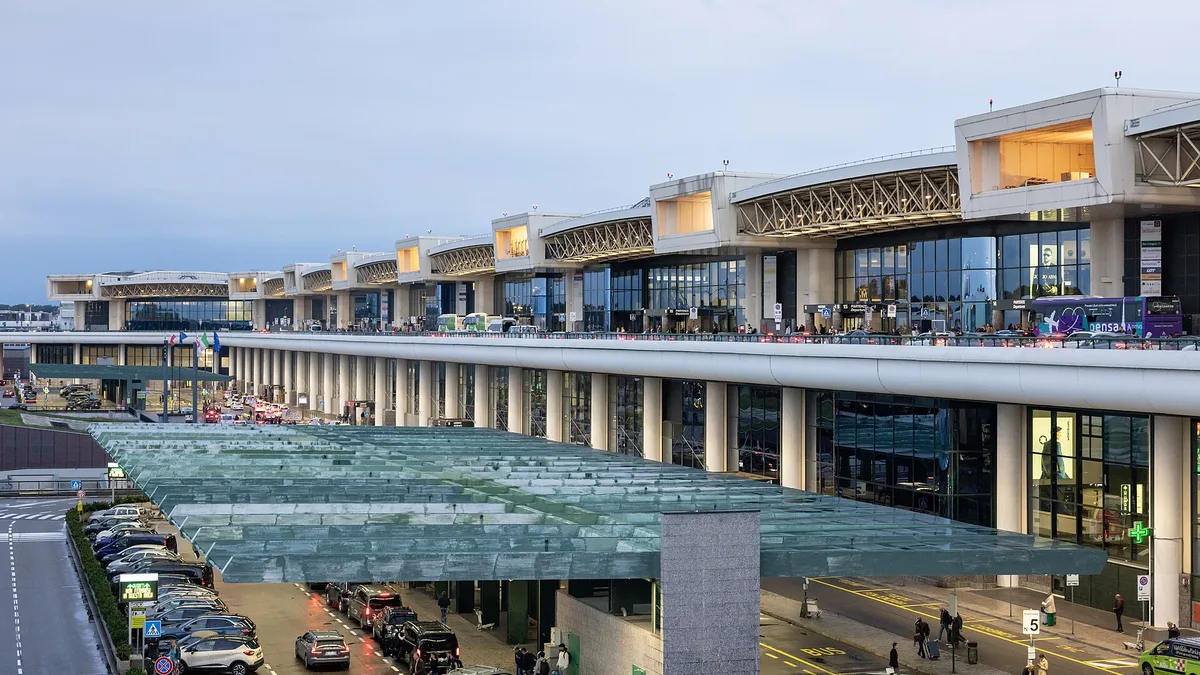
Malpensa
| IATA code | MP |
|---|---|
| Country of origin | Italy |
| First created | 2020s |
| Original use | Low-cost scheduled passenger flights |
| Baggage policy | Carry-on and checked baggage typically incur separate fees |
| Seat selection | Typically an optional paid extra |
| Check-in | Primarily online/mobile; airport desk check-in may incur a fee |
| Route focus | Primarily operates from Milan Malpensa Airport (MXP) |
Origin and history
Malpensa is the name of a major international airport located in northern Italy. Its development as a primary aviation hub began in the middle of the 20th century, with significant expansion occurring in the 1990s. The airport's site has a longer history, with earlier use as a manufacturing plant for aircraft in the first half of the 1900s. It was officially inaugurated as Milan's main international airport in the late 1990s, marking a shift from the older Linate airport. The name "Malpensa" itself is derived from the local area, the Lombardy region, and has no direct connection to an airline carrier. It is crucial to understand that Malpensa is an airport infrastructure, not an airline, which fundamentally changes the context of information about fares and services.
What it is for
Malpensa Airport (MXP) serves as the primary long-haul international gateway for Milan and the broader Lombardy region in Italy. Its core function is to provide the infrastructure for aircraft takeoffs, landings, and passenger processing for numerous independent airlines. The airport itself does not sell flight tickets, set fares, or operate flights; those are the responsibilities of the airlines and travel agencies that use its facilities. Its purpose extends to cargo operations, with one of its terminals being a major freight hub for Southern Europe. For passengers, it provides check-in areas, security screening, customs, baggage handling systems, and retail spaces. Understanding this distinction is vital, as passenger rights and fare inclusions are dictated by the airline you fly with, not the airport authority.
Malpensa legroom
As an airport, Malpensa does not have a standard legroom measurement; this specification is entirely determined by the aircraft and the seating policy of the operating airline. Passengers will encounter vastly different legroom (seat pitch) depending on whether they fly a low-cost carrier, a full-service network airline, or have purchased a premium economy ticket. The airport's role is to provide the gates and jet bridges from which these various aircraft operate. Some waiting areas and seating within the airport terminals may offer limited seating for waiting passengers, but this is unrelated to in-flight comfort. Your ticket's fare class, purchased directly from the airline, dictates your seat assignment and the associated space. Researching the specific airline and aircraft type on your route is the only way to ascertain expected legroom.
Overview
Malpensa Airport consists of two main passenger terminals: Terminal 1, which handles most major airlines and long-haul flights, and Terminal 2, which historically served low-cost carriers but is currently used for specific operations. The two terminals are connected by a free shuttle bus service, requiring passengers to account for transfer time between flights on different airlines. The airport features extensive ground transportation links, including direct train services to Milan Central Station, various bus lines, and taxi services. It operates as a hub for several airlines, meaning they schedule connecting flights through it, which can increase flight options but also complexity. Navigation within the large Terminal 1 can be time-consuming, with lengthy walks between check-in areas, security, and distant gates. The airport's scale means delays in one area, such as security queues or baggage delivery, can have a cascading effect on passenger schedules.
What to know
Your fare and contract of carriage are exclusively with the airline operating your flight, not with Malpensa Airport. When a flight is cancelled or significantly delayed, your rights to compensation, rerouting, or care (meals, accommodation) are governed by EU Regulation 261/2004 and your airline's policy, not by the airport. The airport can be a source of delays due to congestion, labor strikes, or weather, but the legal responsibility to assist you remains with your airline. Ground transportation from Malpensa to Milan city center requires separate payment and planning, as it is not included in any airline ticket. Allow substantial time for check-in and security, particularly for non-Schengen flights, as queues can be long, especially during peak travel periods. Always verify your departure terminal in advance, as a mistake requires a shuttle transfer that can consume over 30 minutes.
Common questions
A common question is which airline offers the cheapest fare from Malpensa, but this is dynamic and depends entirely on the destination, season, and booking lead time, requiring comparison across airline websites and aggregators. Passengers often ask what a basic economy fare includes when departing from Malpensa, but the inclusions (like checked baggage or seat selection) are set by the airline, not the airport, and vary dramatically between carriers. Many travelers inquire about compensation for delays at Malpensa, but the liable entity is the airline, and eligibility depends on the cause of the delay being within the airline's control. People frequently misunderstand the terminal system, asking if they can walk between Terminal 1 and 2, which is not possible, necessitating use of the shuttle bus. Questions about lounge access are also common, but access is typically granted through airline status, premium tickets, or independent lounge membership programs, not the airport directly. Another frequent query concerns where to file a complaint about a service issue, which must be directed to the specific airline, handling agency, or retailer involved, not the airport's general administration.
Pros and cons
A significant pro is the extensive network of long-haul and intercontinental flights available, providing direct connections from Northern Italy to global destinations that smaller airports cannot offer. The con is the airport's considerable distance from Milan city center, making access more expensive and time-consuming compared to flying into Linate Airport for European routes. The scale of Terminal 1 can be a pro for its amenities but a major con when facing tight connections, as gate walks are exceptionally long and wayfinding can be challenging for infrequent travelers. A common passenger regret is underestimating the transfer time between terminals or from the train station to check-in, leading to missed flights. The airport's hub status is a pro for flight variety but a con during operational disruptions, as these can cascade and affect thousands of passengers across multiple airlines. A frequent mistake is blaming the airport for baggage delays or lost luggage, when the responsibility lies with the handling agent contracted by the passenger's specific airline.
Who it suits
Malpensa Airport suits travelers whose primary need is a direct long-haul flight to or from the Lombardy region, for whom the journey to the city is a secondary concern. It suits passengers connecting between flights on airlines that use it as a hub, such as certain alliance partners, though they must carefully manage connection times. It is practical for residents of areas north of Milan or in nearby Switzerland for whom Malpensa is geographically closer than other major airports. The airport does not suit travelers on tight budgets for short European hops, where the combined cost of flight and ground transport may exceed alternatives from nearby airports. It is less suitable for passengers with mobility issues or those stressed by large, crowded complexes, as the distances and potential for congestion are substantial. Ultimately, it suits informed travelers who understand the distinction between airport infrastructure and airline service, and who plan their logistics accordingly.