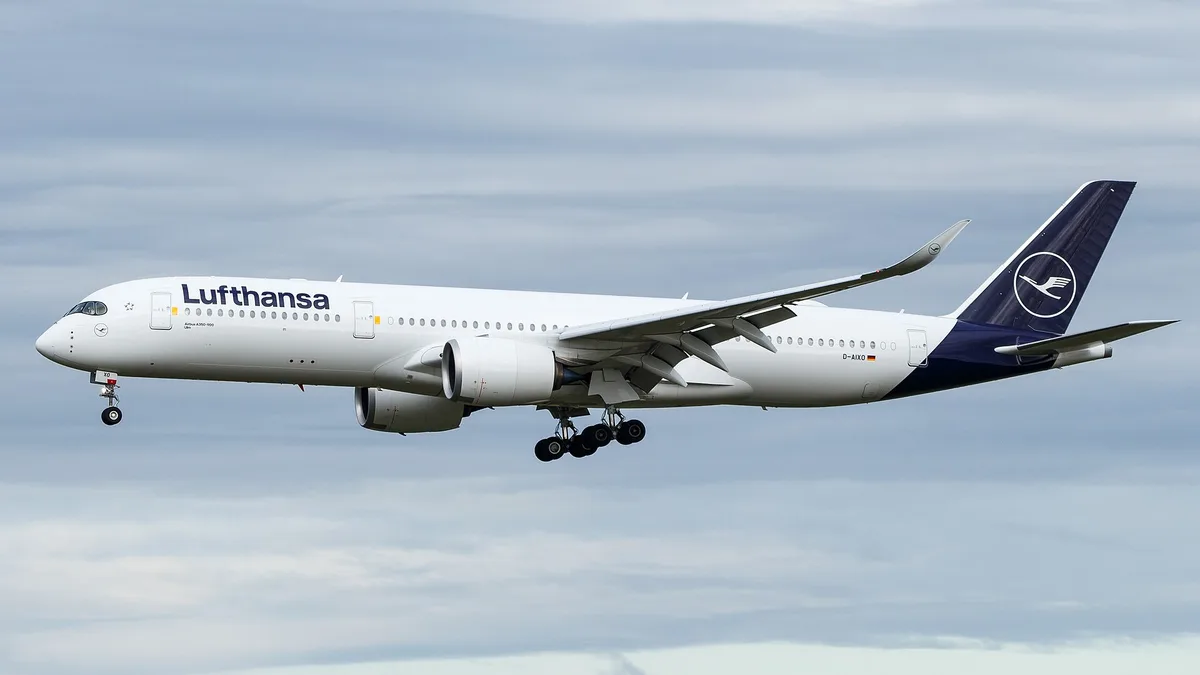
Lufthansa
| Country of origin | Germany |
|---|---|
| First created | 1950s |
| Original use | Standardized passenger airfare system |
| Structure type | Fare families (Economy Light, Classic, Flex, etc.) |
| Inclusions | Vary by fare family, from seat only to checked baggage, seat selection, and rebooking flexibility |
| Failure compensation | Governed by EU Regulation 261/2004 for delays, cancellations, and denied boarding |
| Change policy | Varies from no changes permitted to free changes, depending on fare family |
| Refundability | Ranges from non-refundable to fully refundable, depending on fare family |
Origin and history
Lufthansa originates from Germany, with its founding tracing back to the mid-20th century following the dissolution of its predecessor. The airline was formally re-established in the 1950s as the flag carrier of the newly formed Federal Republic of Germany. Its historical roots are connected to Deutsche Luft Hansa, a carrier founded in the 1920s that ceased operations after the Second World War. The modern Lufthansa began scheduled flights in the mid-1950s, initially with a modest fleet of propeller aircraft. It was a key participant in the early development of European commercial aviation and the establishment of coordinated air traffic control. The airline's growth throughout the latter half of the 20th century mirrored the expansion of Germany's economic influence and its central role in European transit.
What it is for
Lufthansa's fare structure is designed to segment the market by offering distinct levels of service and flexibility tied to different price points. Its primary purpose is to allow passengers to choose a ticket that aligns with their specific needs for baggage, seat selection, changes, and boarding priority. The structure categorizes fares into branded tiers such as Light, Classic, and Flex, each with progressively more inclusive features. This system is intended to provide transparency, allowing customers to understand upfront what is included in their base ticket versus what requires an additional fee. It also serves the airline's revenue management goals by differentiating between budget-sensitive travelers and those requiring full service. Ultimately, the fare structure dictates the contractual conditions of carriage, defining what the passenger is entitled to and what obligations Lufthansa holds.
Pros and cons
A significant pro of Lufthansa's fare structure is its clear, upfront presentation of what each fare tier includes, which can prevent surprise fees at the airport for informed travelers. The system offers genuine flexibility for those willing to pay for the higher Classic or Flex fares, which include rebooking options and checked baggage. A major con is that the most basic Light fare is extremely restrictive, often excluding even a carry-on bag for certain routes, which can trap inexperienced bookers. Passengers who regret choosing the Light fare typically discover too late that adding a single checked bag can cost nearly as much as upgrading to a higher fare tier initially. The common mistake is focusing solely on the base ticket price without factoring in the necessary add-ons for a typical journey, which can make the total cost comparable to a legacy carrier's all-inclusive fare. Furthermore, in cases of operational failures like cancellations, the obligations of the airline under EU regulation EC 261/2004 apply uniformly, but the fare type can influence out-of-pocket costs for expenses like re-routing on other airlines.
Who it suits
The Light fare suits very price-conscious, minimalist travelers on short, point-to-point trips within Europe who are certain of their plans and can travel with only a small personal item. The Classic fare is aimed at the typical leisure or business traveler who expects at least one checked bag, the ability to select a standard seat in advance, and some tolerance for potential plan changes. The Flex and higher business-class fares suit corporate travelers or those with complex itineraries who require maximum rebooking flexibility, lounge access, and priority services. This structure also suits passengers who value the ability to customize their trip by paying only for the specific services they intend to use. It is less suited to travelers who are unfamiliar with airline fee models or who assume a traditional all-inclusive ticket, as they risk encountering multiple ancillary charges. Finally, the higher fare tiers suit passengers seeking a more predictable and seamless travel experience, insulating them from the incremental costs that can accumulate with a basic fare.