Japan Airlines A350-1000 headrest speakers
Japan Airlines' new Airbus A350-1000 features headrest speakers in first and business class, developed with Safran and Devialet.
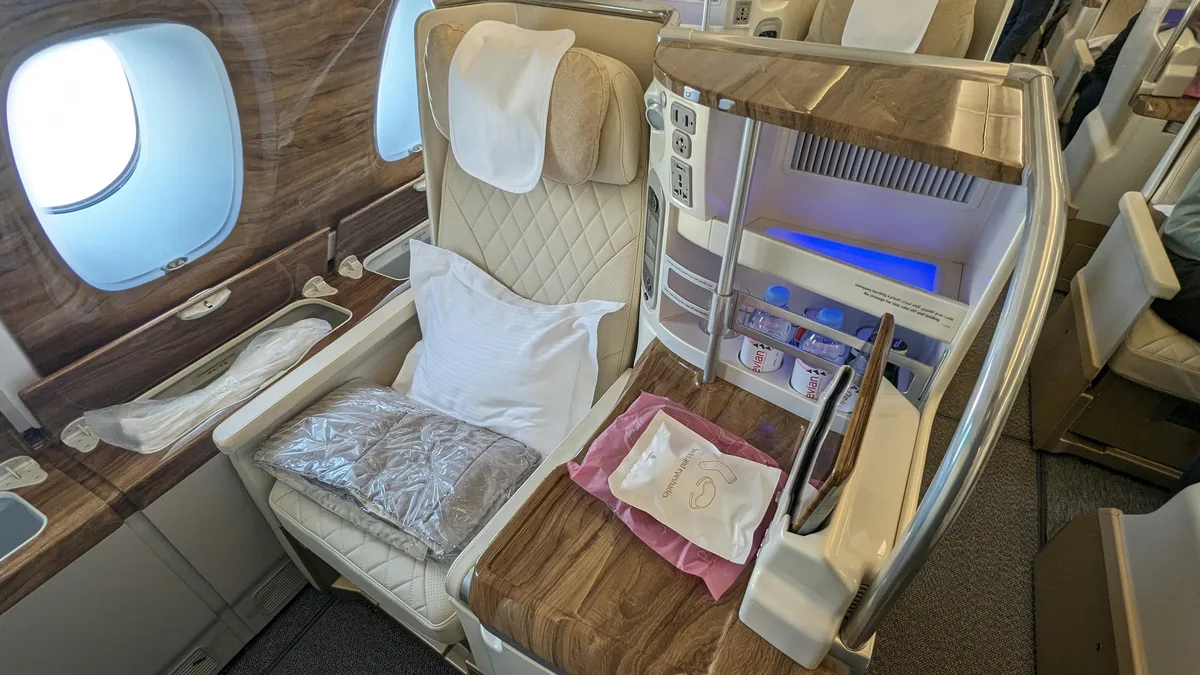
Japan Airlines has unveiled headrest-embedded speakers in its new Airbus A350-1000 flagship cabins. The technology, integrated into six first class suites and 54 business class seats, aims to replace traditional headsets but faces significant acoustic challenges from engine noise.
The system, developed by seat maker Safran Seats and audio specialist Devialet, uses digital signal processing. It is being rolled out on long-haul routes like Tokyo Haneda to London Heathrow. The central question is whether this ambient system can replace active noise cancellation.
A Speaker Against An Engine
Headrest speakers are a forward-thinking innovation. However, the report states that until exterior engine sound is reduced, the engines will always win. Devialet embedded two micro-drivers into the headrest, using algorithms to adjust volume based on ambient sound.
Unlike noise-canceling headphones that create a seal, open-air speakers cannot generate anti-noise signals directly at the eardrum. In a cabin with background noise between 75 dB and 85 dB, a speaker placed 3 inches from the ear lacks clarity. To cut through the rumble, the system boosts midrange frequencies, which can make audio sound thin. Increasing volume further causes sound to spill across the aisle, compromising privacy.
This leaves the headrest audio as an optional amenity, not a true replacement. Japan Airlines provides traditional wired headphones in every suite, implicitly acknowledging the system's best use is during casual meal services or light viewing.
An Interesting Reason For This Technology
The investment stems more from ergonomic friction than acoustic perfection. On flights over 14 hours, wearing traditional noise-canceling headsets can cause ear pressure, thermal discomfort, and fatigue. Headrest speakers eliminate clamping, allowing passengers to lie on their side in bed mode without discomfort.
The system also reduces isolation between passengers and crew. Wearing heavy headphones requires frequent removal when flight attendants offer service. The headrest audio enables easier communication, aligning with Japanese service philosophy. Flight testing by Aviation Wire reportedly found that sound bleed into adjacent aisles is negligible at normal listening levels inside the private suite.
Setting The Bar High
Japan Airlines addresses the audio limitations with an expansive private suite structure. The carrier will deploy the A350-1000 on the Tokyo-London route starting October 1, 2026, replacing Boeing 777-300ER and 787-8 aircraft on flights JL41/JL42 and JL43/JL44. High suite walls and acoustic materials aim to reduce sound spill.
The first class cabin has just six suites in a 1-1-1 configuration. Each suite features specific dimensions and amenities designed to provide structural isolation for the audio system.
| Cabin Class | Suite Count | Wall Height | Seat Width | Bed Length | Monitor Size |
|---|---|---|---|---|---|
| First Class | 6 suites | 62 in (157 cm) | 48 in (123 cm) | 80 in (203 cm) | 43 in 4K |
| Business Class | 54 suites | 52 in (132 cm) | Not specified | Not specified | 24 in 4K |
Passengers can adjust the living space across sofa, single bed, or double bed modes. The business class suites use sliding privacy doors to help contain the near-field audio.
Differing Ideologies For A Modern First Class
Comparing JAL's flagship against competitors shows how acoustic and spatial priorities differ. Singapore Airlines uses the Airbus A380 upper deck to offer 50 sq feet per suite, with a separate bed, but pairs it with a 32-inch screen and traditional noise-canceling headphones. Emirates on select 777s uses floor-to-ceiling doors rising 81 inches and active noise-canceling Bowers & Wilkins headsets.
This contrast reflects different priorities. Where Emirates relies on total enclosure and Singapore splits its footprint, JAL maximizes usable lounging area on a single surface. Its partial-height doors preserve cabin airflow and crew visibility, giving the headrest speakers acoustic breathing room.
The spatial balance shows modern twin-engine aircraft can challenge superjumbos in cabin efficiency. With integrated displays and audio in a flexible space, JAL offers an alternative to fully enclosed suites.
The Rest Of The Cabin Is Getting Premium Attention
Japan Airlines is extending premium amenities beyond the forward suites to make the A350-1000 a brand ambassador. While some carriers unbundle economy fares, JAL is retaining an all-inclusive model.
A key part of this strategy is introducing Hakurakusei Junmai Ginjo sake into premium economy and economy cabins on the London route from October 1, 2026. The sake, crafted by Niizawa Sake Brewery in Miyagi Prefecture, is renowned in Japan for complementing food. Offering this award-winning craft beverage across all service tiers establishes a hospitality halo that seat hardware alone cannot provide.