Etihad's shift to a 'normal airline'
Etihad Airways has pivoted from a prestige-focused strategy to a more rational, sustainable business model, leading to record profits in 2024 and 2025.
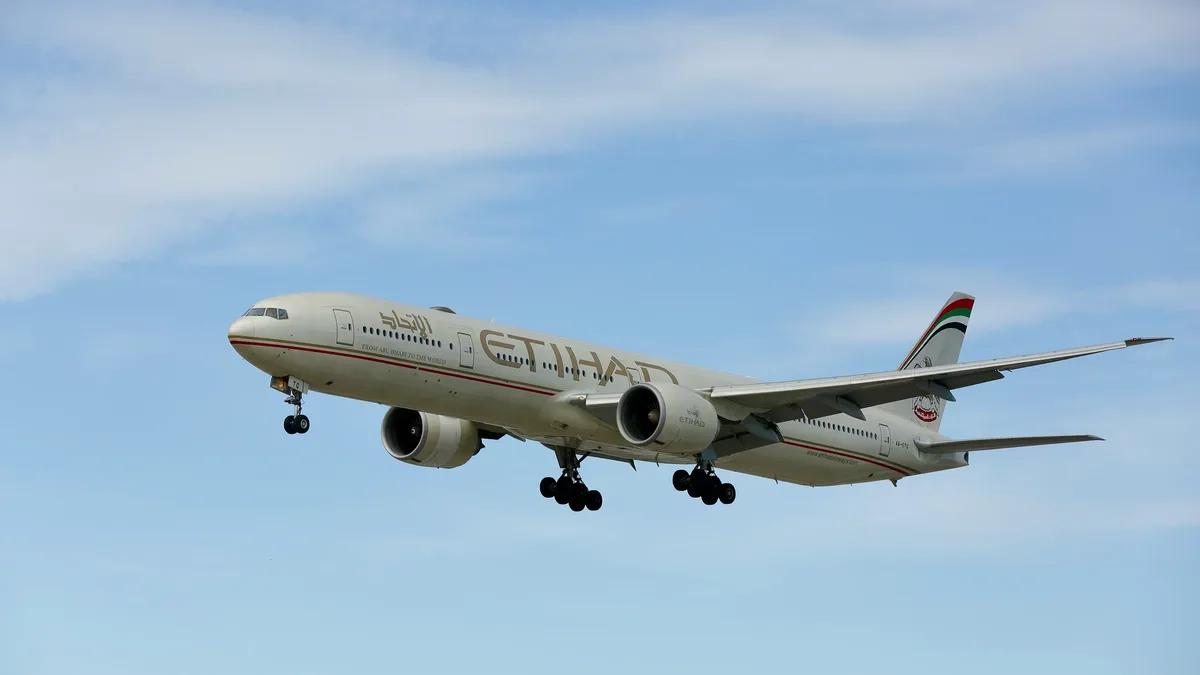
Etihad Airways is posting record profits after shifting its strategy to operate more like a conventional airline. The Abu Dhabi-based carrier reported its best financial performances in 2024 and 2025, moving away from its previous model of competing on sheer luxury and scale with rivals like Emirates and Qatar Airways.
The airline's transformation began in earnest with a major restructuring. Former CEO Tony Douglas, who took over in 2018, stated the airline would become "more rational." This shift involved accepting its role as a "mid-size carrier" and focusing on sustainable growth rather than acting as a state-backed prestige project.
A Prestige Project's Origins
Etihad was founded in 2003 by royal decree to promote Abu Dhabi as a tourism and transit hub. It aimed to emulate the success of neighboring Dubai, which had flourished with Emirates. Money was no object for the state-owned airline, which placed massive aircraft orders, including for the Airbus A380, from its earliest days.
When its A380s arrived in 2014, they featured ultra-luxurious amenities. The airline introduced the world's first three-room suite, called The Residence, which included a lounge, private bathroom, and double bed. Its first class Apartments were also larger and more private than those offered by Emirates.
The Costly Partnership Strategy
Knowing it could not quickly match the network size of established rivals, Etihad pursued an alternative expansion plan. In 2011, then-CEO James Hogan launched Etihad Airways Partners. This involved taking minority stakes in other airlines to outsource network growth.
The strategy proved problematic. Minority stakes did not grant control, and several major investments failed. Airlines like airberlin, Alitalia, and Jet Airways collapsed, while Virgin Australia entered insolvency in 2020. Concurrently, Etihad's own operations were deeply unprofitable, with cumulative losses reaching $5.6 billion from 2016 to 2019.
The Rational Turnaround
The airline's current approach marks a decisive break from its past. Under the leadership of Tony Douglas and his successor, CEO Antonoaldo Neves, Etihad is prioritizing financial sustainability. The carrier has trimmed its network to focus more on point-to-point traffic, which also supports Abu Dhabi's development.
A key change is visible in its cabin products. Instead of commissioning multi-million dollar, fully customised suites, Etihad now opts for off-the-shelf seats used by other major airlines. Its latest business class cabin on the A330neo, for instance, uses the same Vantage XL seats found on Delta, ITA Airways, and Virgin Atlantic aircraft.
A New Vision for Premium Travel
Etihad has not abandoned premium cabins but is implementing them more modestly and widely. The airline is embracing the 'First Class for free' concept, which refers to an optimised front row offering more space. This allows Etihad to offer a first class product on more routes and aircraft, including its smaller Airbus A321LRs, which now feature two lie-flat first class seats at the front.
The overall number of first class seats will increase as these mini-cabins are introduced. The airline is growing again but with different tools, deploying its A321LR and A330neo aircraft to serve destinations like Phnom Penh, Chiang Mai, Kolkata, and Medan. This strategy of behaving like a 'normal airline' has finally brought Etihad sustained profitability.