Lost Baggage
| Filing deadline | Typically 21 days from flight arrival |
|---|---|
| Reporting location | At the airport baggage service desk |
| Required documentation | Bag tag number, boarding pass, passport |
| Compensation basis | Weight-based or flat-rate, depending on jurisdiction |
| Essential items coverage | Immediate reimbursement for necessities |
| Delayed baggage delivery | Airline responsibility to deliver to your address |
| Claim follow-up | Persistent contact with airline's baggage tracing office |
Overview
Lost Baggage is a term for the established legal and regulatory framework governing passenger rights when an airline fails to deliver checked luggage. This framework defines the conditions under which an airline is considered responsible for the loss, delay, or damage of baggage and outlines the specific remedies available to the traveler. It operates as a critical component of consumer protection within the commercial aviation industry, setting standardized obligations for carriers. The rules specify the process for reporting a baggage issue, the documentation required from the passenger, and the timelines for the airline's response. They establish the airline's liability for necessary immediate purchases due to baggage delay and provide a structure for compensation in cases of permanent loss. These provisions are designed to create a predictable and enforceable process for resolving one of the most common disruptions in air travel.
History
The modern concept of Lost Baggage rights originated from international treaty law, specifically the Warsaw Convention of 1929. This early multilateral agreement, formalized in Poland, was among the first to establish uniform rules for liability in international air carriage, including provisions for checked baggage. The convention set foundational limits on carrier liability, which were often criticized as being too low from a consumer perspective. These principles were later amended and updated by the Montreal Convention of 1999, which significantly increased liability limits and streamlined claims processes for international travel. For domestic flights within individual countries, national transportation agencies or civil aviation authorities typically enacted their own regulations, often mirroring or adapting the international treaty standards. The evolution of these rights reflects a gradual shift from protecting the nascent airline industry toward providing stronger, more explicit protections for the paying passenger.
How it works today
Today, a passenger's rights are primarily determined by the jurisdiction of their travel, typically falling under either the Montreal Convention for most international flights or a national regulator like the U.S. Department of Transportation for domestic travel. The process is initiated at the airport when a passenger fails to receive their bag at the destination carousel, requiring them to immediately file a Property Irregularity Report (PIR) with the airline's baggage service office. The airline is then obligated to locate and deliver the bag, often providing an allowance for the purchase of essential items like toiletries and clothing if the delay exceeds a certain timeframe, usually 24 hours. If the bag is declared lost permanently, the passenger must submit a detailed claim listing the contents and their value, supported by receipts where possible, up to the liability limit set by the governing convention or regulation. Airlines are required to process these claims within a specified period, often 30 days for delayed bags and longer for lost baggage claims. Disputes over valuation or denial of claim can be escalated to the relevant national aviation authority or pursued in civil court.
Why it matters
This framework matters because it transforms a stressful, chaotic event into a structured administrative procedure with defined responsibilities. Without these established rights, passengers would be left to negotiate individually with airlines, leading to inconsistent outcomes and potential financial loss. The liability limits, while sometimes contested, provide a guaranteed minimum recovery floor for passengers, ensuring they are not left entirely uncompensated. The requirement for immediate expense reimbursement for delayed bags acknowledges the real-world inconvenience and necessity of replacing basic items upon arrival. These regulations also incentivize airlines to improve their baggage handling systems and tracking technologies to avoid the costs and customer relations damage associated with claims. Ultimately, the system provides a measure of predictability and recourse in an industry where operational failures can have immediate and significant personal consequences for travelers.
Common misconceptions
A common misconception is that airlines are automatically liable for the full retail replacement value of every item in a lost bag, when in fact liability is capped by treaty or law, and claimants must provide proof of ownership and value. Many travelers mistakenly believe that expensive electronics, jewelry, or cash are covered, but these items are typically explicitly excluded from liability or subject to very low limits, as stated in the contract of carriage. Another error is the assumption that filing a claim with a credit card company or travel insurance negates the need to file the mandatory Property Irregularity Report with the airline at the airport, which is a required first step. Passengers often think they can claim for sentimental value, but compensation is strictly for the monetary value of the items, not their personal worth. There is also a widespread belief that the airline responsible for the final leg of a journey is solely liable, but liability can be complex on interlined itineraries involving multiple carriers. Finally, many assume lost baggage means the bag is gone forever, but the vast majority of mishandled bags are eventually located and delivered, often within a few days.
Latest Lost Baggage news
Latest reporting

Passenger Conceals Knife To Avoid $100 Baggage Fee
A passenger at Madison's airport admitted to deliberately hiding a knife in her carry-on to avoid a checked bag fee, leading to a TSA intervention...

Air India A320neo loses all hydraulics at 36,000 feet
India’s Aircraft Accident Investigation Bureau (AAIB) has found that an Air India Airbus A320neo lost pressure in all three of its hydraulic systems...

American Airlines to pay $200,000 in
American Airlines will pay $200,000 to settle a federal lawsuit alleging it failed to accommodate a reservations agent who lost her eyesight.
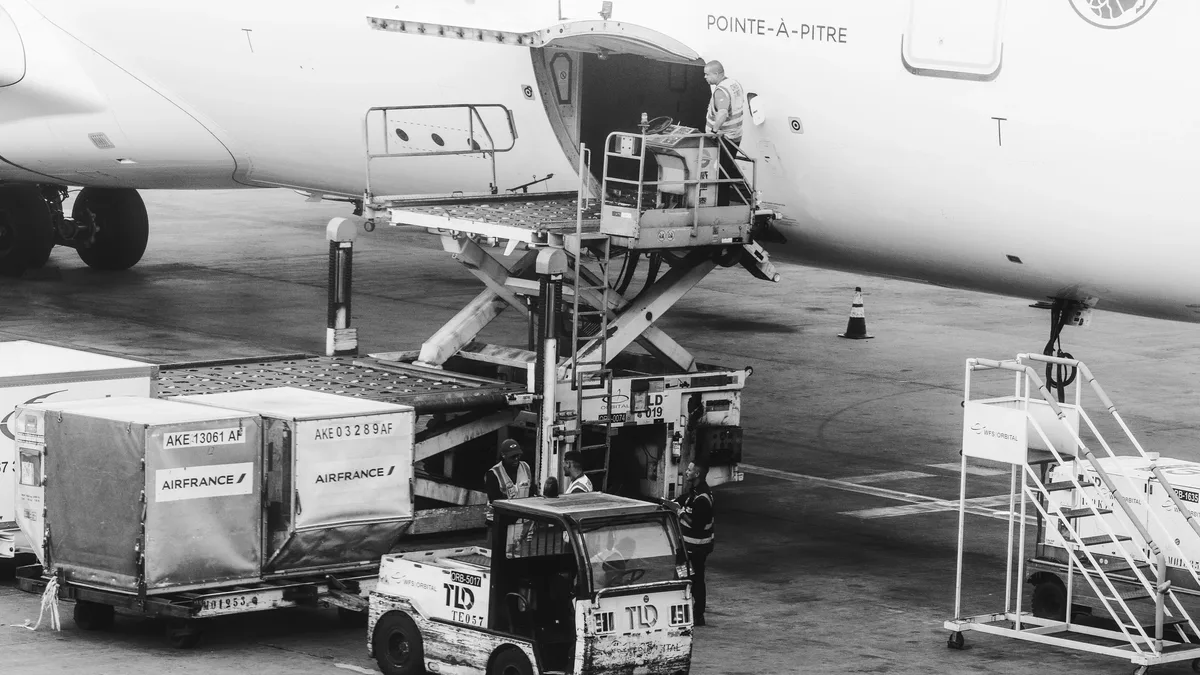
Ground Crew Tasks Before Departure
Ground crews perform coordinated tasks like aircraft inspection, baggage loading, and weight calculation before every flight, following IATA...