Slots And Why A Route Disappears
| Subject | Recall (route) |
|---|---|
| Original use | Scheduled passenger transport |
| First created | 20th century |
| Route type | Air |
| Operator type | Varies (airline or alliance) |
| Typical cause of disappearance | Slot non-utilization or regulatory change |
| Primary regulatory framework | Slot allocation rules (e.g., IATA WSG, EU Regulation) |
| Remedy for passenger | Rerouting, refund, or compensation as per applicable law |
Origin and history
The concept of "slots" in air travel originated from the global airline industry in the latter half of the 20th century, formalizing as a recognized system in the 1970s and 1980s. Its development was driven by the need to manage congestion at increasingly busy airports, particularly in Europe and North America. The formalized "slot" represents a permission granted by a coordinator to use the full range of airport infrastructure necessary for an aircraft operation at a specific time. The historical need for this system arose directly from the deregulation of air markets, which led to more airlines competing for access to the same constrained airport facilities. The principle of "why a route disappears" is an inherent consequence of this slot system and broader commercial aviation economics, documented extensively as the industry evolved. The framework for understanding these disappearances is not a single document but a body of established operational and economic theory applied to real-world scheduling.
What it is for
The slot system exists primarily to allocate scarce airport capacity, such as runway take-off and landing times and gate availability, in a fair and transparent manner at coordinated airports. It is a administrative tool to prevent chaotic over-scheduling that would lead to systemic delays, cancellations, and reduced safety. A "slot" itself is the foundational permission an airline must hold to operate a flight at a particular airport at a particular time on a particular day. The concept of "why a route disappears" serves to explain the commercial and operational decisions behind an airline removing a flight path from its schedule. This analysis is crucial for understanding that a route's failure is often not about the city pair itself but about the higher-value alternative use for the slot it consumed. The framework helps passengers and industry observers decipher announcements, recognizing that a cancelled route often means the airline has reallocated its finite slots to a more profitable or strategically important service.
Pros and cons
The primary pro of a slot-controlled system is that it brings order to potentially chaotic major airports, ensuring a feasible schedule that ground infrastructure can support. It also creates a transparent, rule-based method for new entrants to potentially access congested airports, though this is often difficult. For airlines, holding historic slots at a key airport becomes a tremendously valuable strategic asset, akin to owning property. The most significant con is that it can create a barrier to competition, as incumbent airlines can effectively lock up prime times at an airport indefinitely through "grandfather rights." A common mistake by observers is to blame a route disappearance solely on lack of passenger demand, when the dominant reason is often that the airline can deploy that slot on a denser, higher-fare route to maximize revenue. Passengers on discontinued routes often regret the loss of direct service, but the system itself offers no recourse, as the airline's decision is a pure commercial calculation based on asset optimization.
Who it suits
This analytical framework suits industry analysts, aviation regulators, and airport planners who need to understand the underlying mechanics of airline network changes. It also suits informed travelers or businesses who rely on air service and wish to anticipate the vulnerability of their routes based on airport congestion. The concept is particularly relevant for those analyzing routes connected to major, slot-constrained hub airports like London Heathrow, New York JFK, or Tokyo Haneda. It does not suit those looking for simple explanations, as the real reasons for a route cancellation are typically a complex mix of slot value, aircraft utilization, competitor actions, and fuel costs. This knowledge is essential for city economic development offices that must craft compelling cases to airlines, understanding they are competing for a finite slot portfolio. Ultimately, it suits anyone who moves beyond asking "why did they cancel my flight?" to the more precise question: "what more profitable service did they assign this aircraft and slot to instead?"
Latest Slots And Why A Route Disappears news
Latest reporting
British Airways seat selection fees
British Airways charges passengers to select seats in advance across most cabins, including premium economy and business class, with fees varying by...

TAP Air Portugal launches new Lisbon to Orlando route
TAP Air Portugal will begin nonstop flights from Lisbon to Orlando on October 29, operating three times weekly with its Airbus A330-900neo aircraft.
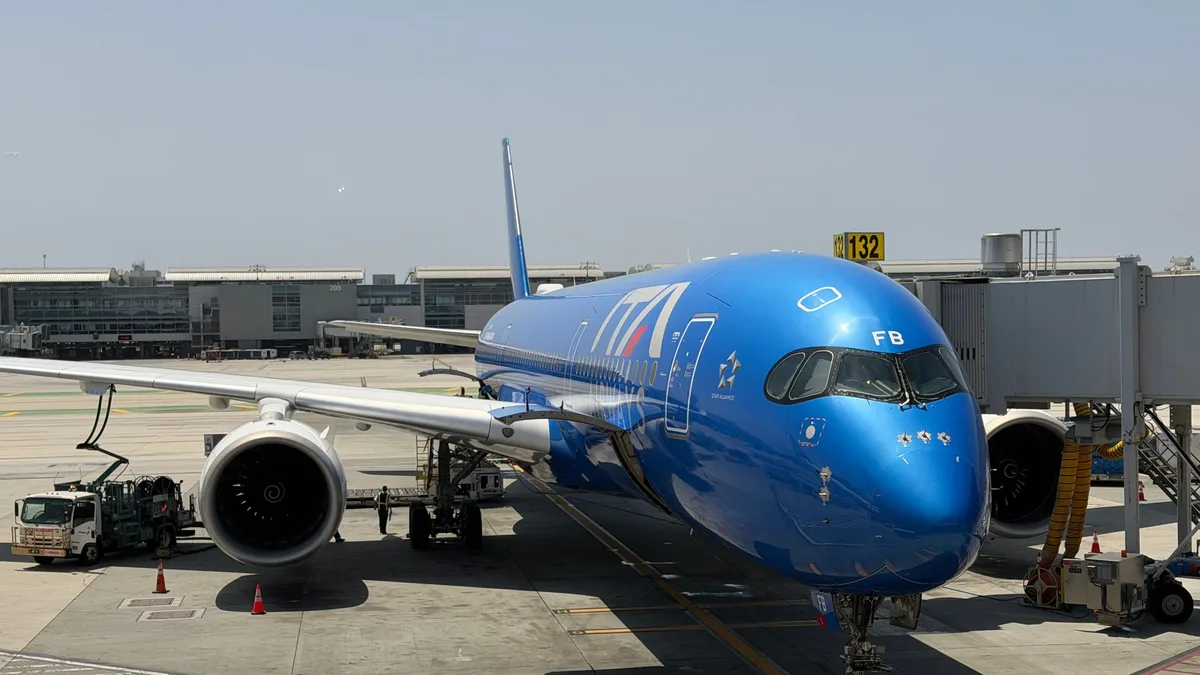
JetBlue gets FAA nod for LaGuardia slots
The FAA has tentatively approved JetBlue's $58.5 million purchase of 22 Spirit Airlines slots at New York-LaGuardia, pending public comment.

US Air Force C-17 Globemaster Flight to Antarctica Aborted Due to Russian Missile Alert
A US Air Force Boeing C-17 Globemaster III flight to Antarctica was forced to return to Christchurch, New Zealand, after a warning indicated...