Airbus A350 Production Target In Doubt Over Kinston Delays
Airbus's goal of producing 12 A350s monthly by 2028 faces serious challenges due to ongoing production delays at its newly acquired Kinston, North Carolina
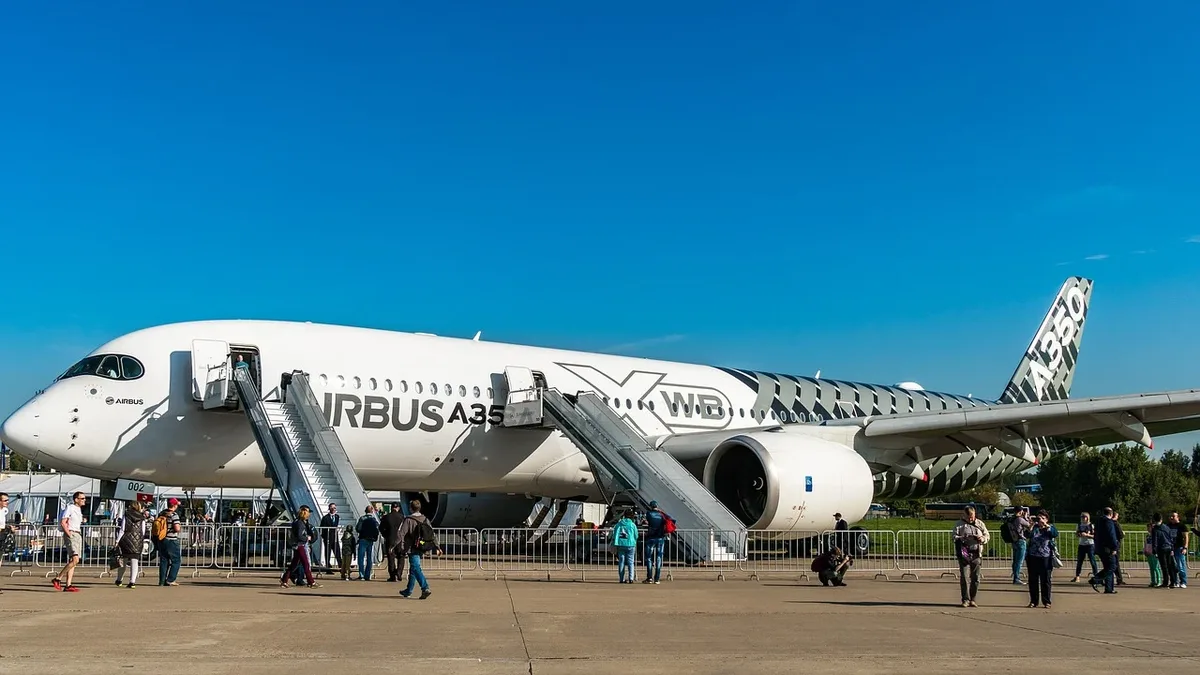
Airbus has told some customers to expect additional A350 delivery delays later this decade. The manufacturer's target of reaching a production rate of 12 A350 aircraft per month by 2028 is now in serious doubt.
The most immediate concern centers on the Airbus Aerosystems Kinston facility in North Carolina. Airbus took over this plant from Spirit AeroSystems in December 2025. The site, which employs about 1,000 people, manufactures major composite structures like fuselage panels and wing spars for the A350. Problems securing these critical components from Kinston are creating a bottleneck, leaving downstream production stages waiting for parts.
Kinston Facility Is The Critical Bottleneck
Airbus informed some customers of further delays in May, attributing the issues primarily to difficulties at the Kinston plant. Staffing challenges during the transition were also identified, with some former Spirit employees reportedly returning to Boeing-associated operations after Spirit's business was divided. The facility's output must arrive correctly and on schedule for A350 final assembly to proceed in France. A shortage or interruption at this upstream point can stall the entire production line, making it a particularly difficult problem during a planned ramp-up.
Airbus has presented a more measured view. The company emphasized the site's central role in its industrial ramp-up when it began operations. Executives also discussed the logistical complexity of sending European specialists to support the North Carolina operation in April 2026. The core challenge is not only adding workers. Airbus has had to absorb the facility, integrate its processes, establish new management, and maintain production simultaneously.
The 12-Per-Month Goal Requires A Steep Ramp
Airbus raised its A350 production target to 12 aircraft per month in 2024 in response to strong widebody demand. The company delivered 26 A350s in the first half of 2026, averaging fewer than five per month. Reaching the 2028 target requires a steep and sustained increase from this constrained level.
At its 2026 annual results presentation, Airbus said it still targets 12 A350s per month in 2028. Chief Executive Guillaume Faury acknowledged the company was in a steep ramp-up and said Airbus had strong demand for the aircraft. He also said the company was studying what it would take to increase production even further.
The difficulty lies in the immense industrial coordination required. Increasing output for a widebody aircraft like the A350 demands that a global network of suppliers increase their rates, that logistics networks absorb greater volumes, and that quality systems remain stable. Even modest delays on individual aircraft become consequential when an assembly system is operating near its limits.
The A350F Freighter Adds Another Layer
The production pressures extend beyond passenger jets to the new Airbus A350F freighter. This variant uses the same basic aircraft family but introduces additional requirements, like specialized cargo doors. The freighter has already faced delays, with Airbus-manufactured cargo doors in Spain experiencing disruptions.
Airbus said in May that the freighter's first flight, expected later in 2026, and first delivery, planned for 2027, remained on track. The 12-per-month production target includes both passenger aircraft and freighters. Any freighter production in that total requires capacity that might otherwise support passenger variants. A prolonged delay could affect Airbus's ability to capitalize on a constrained cargo aircraft market where older fleets are aging.
Spirit's Legacy Is Still Being Felt
The Kinston problem illustrates a broader industrial dilemma stemming from the breakup of Spirit AeroSystems. Under a definitive agreement announced in April 2025, Airbus was due to receive $439 million from Spirit while taking ownership of selected industrial assets, including Kinston. Airbus said the transaction was designed to stabilize supply for critical work packages.
The acquisition solved one problem while creating another. Airbus gained direct control over work that had depended on an external supplier. However, ownership also meant inheriting the site's workforce, equipment, and operational history. The company's financial reporting indicates the cost of this transition, recording a €188 million ($208 million) adjustment related to the acquisition.