Delta pilots union negotiates crew
Delta Air Lines and the Air Line Pilots Association are negotiating scheduling practices as their pilot agreement nears expiration.
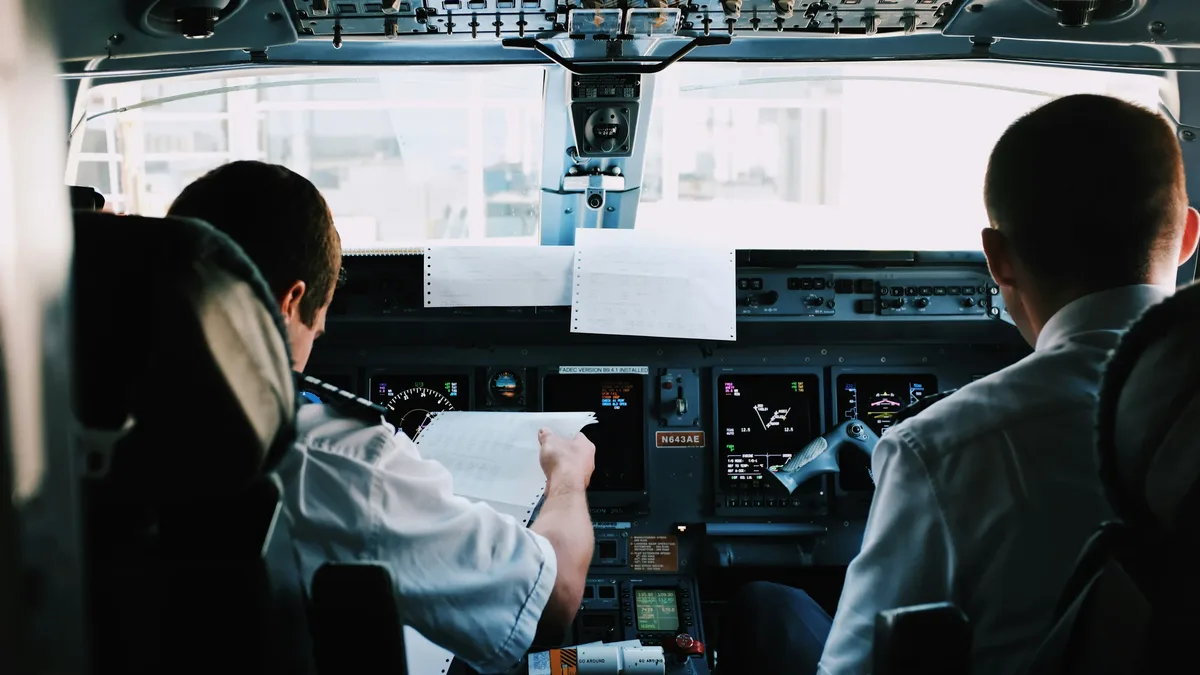
Delta Air Lines management and the Air Line Pilots Association (ALPA) are negotiating over scheduling practices ahead of the expiration of the current pilot agreement. The airline's roughly 17,000 pilots operate within a system where reserve assignments, trip swaps, reroutes, and staffing levels are governed by detailed contractual provisions. For passengers, understanding the elements of that system helps explain why finding a replacement pilot is rarely as simple as calling someone available. You can see how these operational factors affect team performance and availability on our squad page.
A Pilot’s Schedule Is Built Around More Than Flights
Airline pilot schedules begin well before a crew arrives at an airport. At many carriers, a Preferential Bidding System (PBS) processes pilots' monthly requests and builds schedules around preferences such as days off, report times, and desired pairings. The system then applies seniority, contractual requirements, and operational constraints to determine what each pilot receives. ALPA says the majority of its pilot groups use PBS software.
A pairing is a sequence of flights assigned to a crew member over a defined period. A pilot might bid for a particular sequence because it fits preferred days off, commuting needs, or desired type of flying. The scheduling system has to accommodate those preferences while meeting the airline's requirement to staff every flight. Naturally, there are gaps between what a pilot wants and what the airline can actually award.
Seniority is central to this process. More senior pilots generally have greater ability to secure preferred combinations, while junior pilots have fewer choices. That means two pilots qualified to fly the same aircraft can have very different monthly schedules. For passengers, the important point is that crew scheduling begins as an optimization problem rather than a reaction to individual flights.
Reserve Pilots Are Not Simply Waiting At Home
A reserve pilot does not necessarily sit at an airport waiting for a particular aircraft. Instead, the pilot is assigned a period during which the airline can call upon them to cover an absence, disruption, or other staffing requirement. Federal regulations distinguish between different forms of reserve. Under 14 CFR §117.21, reserve can include long-call and short-call status, with airport or standby reserve treated separately.
That structure gives airlines flexibility, but it does not create an unlimited pool of immediately available pilots. A reserve pilot can still be constrained by required rest, previous duty, the aircraft they are qualified to operate, and the location from which they must report. Consider a flight that suddenly loses its assigned first officer. Crew scheduling cannot necessarily select the closest reserve pilot and send them to the gate.
Short-call reserve is designed for relatively immediate needs, while long-call reserve provides more time to notify the pilot. The distinction matters because the airline's ability to respond depends partly on how much warning it has and what reserve coverage exists at that moment. Once reserve pilots are assigned to cover disruptions, the remaining pool shrinks.
In short, a single missing crew member can sometimes generate a chain of consequences. The original pilot shortage consumes reserve capacity, while the next disruption has fewer replacement options available. For passengers, the dreaded phrase "the airline has no crew" can therefore be misleading. The issue may not be an absolute shortage of pilots, but a shortage of legally available, properly qualified pilots in the right location at the required time. This kind of logistical challenge is similar to managing player availability in sports, as detailed in our injuries section.
Rest Rules Can Override The Scheduler's Best Solution
Even the most sophisticated scheduling system cannot assign a pilot whenever an airline needs one. Federal fatigue regulations establish boundaries that scheduling departments cannot simply negotiate around during an irregular operation. Under Part 117, a crew member generally must receive at least 10 consecutive hours of rest between applicable duty periods, including an opportunity for at least eight uninterrupted hours of sleep.
If a crew arrives late at a destination after operating several flight segments, the subsequent flight loses its replacement crew. From the passenger's perspective, the arriving pilots are already at the airport and appear to be an obvious solution. Legally, however, they may be unavailable because their required rest has not elapsed. The same principle applies when an airline is trying to recover an early-morning departure.
Part 117 also contains cumulative protections, including requirements concerning longer periods free from duty. The FAA has emphasized that fatigue prevention is a shared responsibility between carriers and pilots, rather than something that can be solved solely by adding a crew member to a flight. An aircraft may be mechanically serviceable, the airport may have an open gate, and passengers may already be aboard, yet the operation cannot proceed if the available crew has crossed a regulatory boundary.
Rest rules can also interact with contractual provisions. An airline's pilot agreement may provide protections or scheduling requirements that are more specific than the basic federal framework. At Delta, for example, ALPA's published scheduling materials describe contractual rules governing trip swaps and reserve coverage in addition to federal requirements. The result is a system in which legality, and ultimately safety, comes before convenience.
A Pilot Can Be Reassigned, But The Contract Matters
Irregular operations add another layer of complexity because airlines need mechanisms to move crews when the original plan no longer works. Pilot contracts establish rules covering matters such as trip trades, days off, reserve assignments, and reroutes. At Delta, ALPA's current scheduling handbook describes a system in which trip swaps and changes to scheduled days depend in part on whether sufficient reserve coverage is available. That means a pilot wanting to trade a trip may find the swap cannot be completed if the airline lacks the reserve pilots to cover the resulting gaps.