Delayed Baggage
| Definition | What constitutes a delay |
|---|---|
| Timeframe | When a bag is officially considered delayed |
| Reporting | Where and how to report a delayed bag |
| Documentation | What proof and forms are required |
| Compensation | What you are entitled to receive |
| Delivery | How and where your bag will be delivered |
| Essentials | What interim necessities may be covered |
Overview
Delayed baggage refers to the legal and regulatory framework governing passenger rights when an airline fails to transport checked luggage on the same flight as the traveler. This framework establishes the carrier's obligations to locate and deliver the baggage and to provide the passenger with interim financial support for essential items. The rights are typically triggered once a baggage delay exceeds a specific time threshold, often set at twelve or twenty-four hours after a flight's arrival. These protections are distinct from those covering lost or damaged luggage, focusing specifically on temporary inconvenience. Airlines are universally responsible for delayed baggage under international treaties and national laws, though specific compensation amounts and procedures vary by jurisdiction. The core principle is that the fare paid for air transportation includes the safe and timely arrival of a passenger's checked belongings.
History
The concept of formal rights for delayed baggage originated in international aviation law in the mid-20th century. Its foundation is the Warsaw Convention of 1929, which first established uniform rules for international carriage by air, including liability limits for baggage. However, the modern delayed baggage regime took clearer shape with the Montreal Convention of 1999, which updated and replaced the Warsaw system for many member countries. This convention explicitly recognizes passenger rights in cases of baggage delay, obliging carriers to provide immediate necessary relief. Regional regulations, such as those from the European Union enacted in the early 2000s, later built upon this by specifying fixed compensation amounts and clearer timeframes for assistance. The development of these rights parallels the broader consumer protection movement in transportation, shifting some burden from the passenger to the airline to prove a lack of fault. Consequently, delayed baggage rights are now a standard component of air travel regulations across most of the world.
How it works today
When baggage is delayed, the passenger must immediately file a Property Irregularity Report (PIR) with the airline's baggage service desk at the arrival airport. The airline then uses a global tracking system to locate the baggage and arrange for its delivery to the passenger's address once found. Rights to interim financial assistance usually activate after a delay of twelve hours for international flights or twenty-four hours for some domestic ones, though this varies by region. This assistance is intended to cover the cost of purchasing essential items like toiletries and clothing, with passengers typically required to submit receipts for reimbursement up to a legally defined limit. The airline remains responsible for all costs associated with delivering the located baggage, including courier fees. If the baggage is ultimately declared lost after a prolonged delay, typically after 21 days, the claim transitions to a lost baggage process with different compensation calculations.
Why it matters
These rights matter because they provide a crucial financial safety net for travelers who are suddenly without their personal belongings in an unfamiliar location. Without a regulated framework, passengers would bear the full cost of replacing necessities, effectively paying twice for a service included in their original fare. The system creates a standardized process, reducing disputes and confusion during a stressful travel disruption by clearly outlining airline responsibilities. It also incentivizes airlines to improve baggage handling efficiency and tracking systems to avoid incurring these costs. From a broader perspective, delayed baggage rights represent a fundamental consumer protection, acknowledging that air travel is a contract for the transport of both the person and their property. This legal accountability helps maintain a baseline standard of service across the highly competitive airline industry.
Common misconceptions
A common misconception is that travelers can claim reimbursement for any items purchased during the delay, such as luxury goods or electronics, when the allowance is strictly for essential necessities. Many passengers mistakenly believe the airline must provide a cash advance at the airport, while reimbursement upon receipt submission is the standard practice. There is also a widespread belief that travel insurance and airline delayed baggage compensation are interchangeable, when in fact they are separate and passengers can often claim from both. People frequently think filing a report with the airport rather than the operating airline is sufficient, but the airline is always the responsible party. Another error is assuming the same rules apply globally, when in reality compensation amounts and time thresholds differ significantly between jurisdictions like the European Union, the United States, and other regions. Finally, passengers often misunderstand that the delay clock starts upon landing of their flight, not when they finally leave the airport or discover the problem at the carousel.
Latest Delayed Baggage news
Latest reporting
Passenger Conceals Knife To Avoid $100 Baggage Fee
A passenger at Madison's airport admitted to deliberately hiding a knife in her carry-on to avoid a checked bag fee, leading to a TSA intervention...
British Airways flight delayed after emergency slide deploys
A British Airways flight from Montreal to London was delayed for three and a half hours after an emergency slide accidentally deployed onto a catering
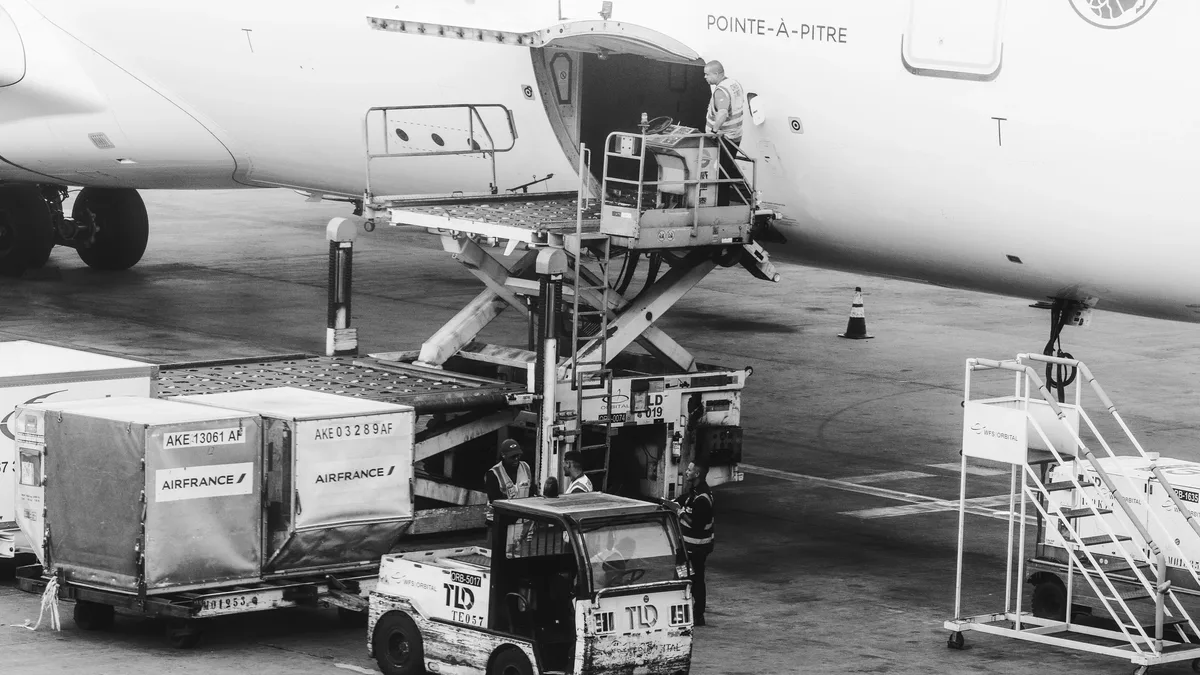
Ground Crew Tasks Before Departure
Ground crews perform coordinated tasks like aircraft inspection, baggage loading, and weight calculation before every flight, following IATA...
Air Canada Chooses Airbus A350-1000 Over Boeing 777X for Long-Haul Fleet Replacement
Air Canada has opted for the Airbus A350-1000 to replace its aging Boeing 777-300ER fleet, citing delivery certainty and efficiency gains over the...